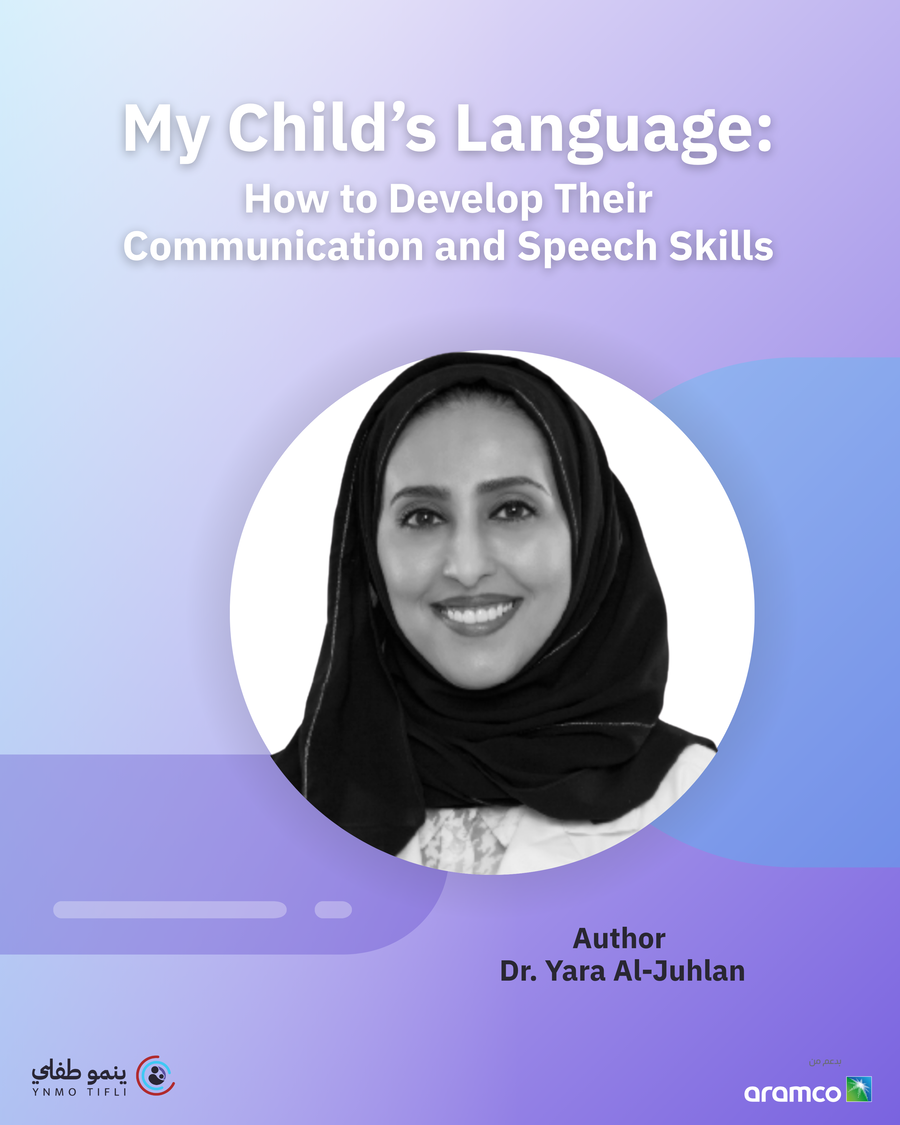
Prepared by: Dr. Yara Mohammed Al-Juhlan
Introduction
Some parents may think that play is merely a way to entertain a child or fill their free time. However, research confirms that play is the child’s true “work.” It is a primary tool for learning and for discovering both the self and the surrounding world. Through play, children develop language, refine social skills, and build motor and cognitive abilities. Therefore, play is not a luxury—it is a developmental and educational necessity in early childhood.
Why is Play Essential?
Stimulates brain development:
Play strengthens neural connections and enhances thinking skills and problem-solving abilities.
Supports mental health:
Play reduces stress and provides children with a natural way to express their emotions.
Enhances language development:
During play, children use new vocabulary and learn conversational skills through interaction.
Strengthens family bonding:
Shared play between parents and children strengthens emotional relationships and attachment.
How Does Play Contribute to Different Areas of Development?
-
Language and Communication Development:
-
Role-play activities (such as pretending to be a doctor or a teacher) provide opportunities for dialogue and vocabulary expansion.
-
Interaction with peers during play helps children develop listening skills and learn negotiation.
-
Cognitive Development:
-
Puzzles and building blocks help children develop logical thinking and understand shapes and sizes.
-
Rule-based games (such as memory games) strengthen attention and memory skills.
-
Social and Emotional Development:
-
Pretend play (such as family role-play) allows children to express their emotions and understand the feelings of others.
-
Negotiation during play teaches conflict resolution skills.
-
Motor Development:
-
Running and jumping support the development of large muscle groups (gross motor skills).
-
Coloring, cutting, and pasting strengthen fine motor skills needed for writing.
How Does Play Promote Language Development?
Play is not merely an entertaining activity; it is one of the most powerful natural drivers of language development in children.
-
Symbolic (Imaginative) Play:
- When a child pretends to be a doctor or a shopkeeper, they create new dialogues.
Example: “Here is your meal” ↔ “How much is it?” → a complete interaction that enriches language use.
-
Social Play with Peers:
- Turn-taking and dialogue exchanges such as “It’s my turn now” or “Give me the toy” help develop listening skills, appropriate responses, and conversational turn-taking.
-
Educational Toys (Puzzles and Building Blocks):
-
These support the use of vocabulary such as: “red, square, above, below.”
Parents can enhance learning by verbalizing actions: “Let’s place the red block on top of the blue one.”
-
Sensory Play (Water, Sand, Dough):
- These activities introduce descriptive vocabulary such as: “cold, soft, wet, sticky.”
-
Physical Play:
- During running or jumping, simple verbal instructions can be introduced such as: “jump,” “run,” “stop.”
These commands strengthen receptive language skills.
Summary: Play provides a natural, rich environment full of language exposure and interactive experiences. It functions as a “live classroom” for language learning, where the child acquires communication skills without feeling that they are being formally taught.
Types of Play with Examples
- Sensory Play: Playing with water or sand (enhances sensory vocabulary such as wet/dry).
- Constructive Play: Building a tower with blocks (develops planning and problem-solving skills).
- Imaginative or Symbolic Play: Role-playing (doctor, teacher) (enhances language and imagination).
- Social Play: Playing with peers (strengthens sharing and cooperation).
- Physical Play: Running, jumping, riding a bike (supports physical development and self-confidence).
How Can Parents Support Their Child’s Play?
- Allocate daily free play time: At least 30–60 minutes per day without interruption.
- Create a safe and stimulating environment: A safe space with age-appropriate toys.
- Positive participation: Join your child’s play sometimes, but allow them to lead the activity.
- Balance different types of play: Physical, educational, and social play.
- Turn routines into play: For example, during shopping: “Let’s look for the red apple together.”
How to Play with My Child? (Age-Based Activities)
From birth to 1 year:
- Sound play and cooing interactions
- Clapping and peek-a-boo games
- Encouraging crawling toward a favorite toy
From 1–2 years:
- Passing a ball or toy (“Give it to me”)
- Naming games (“Where is the car?”)
- Putting objects in and out of containers
From 2–3 years:
- Pretend play (cooking/shop role-play)
- Sorting and organizing games
- Movement games (dancing with music)
From 3–5 years:
- Story role-play using dolls
- Building houses with blocks and assigning roles
- Group games (musical chairs, hide and seek)
Common Challenges and Solutions
- Child gets bored quickly:
Keep play sessions short and frequent instead of long sessions. - Child does not like sharing:
Start by practicing turn-taking with the parent first. - Excessive device use:
Gradually replace screen time with interactive play.
Additional Tips for Parents
- Praise the child’s effort, not only the outcome.
- Talk to the child continuously during play.
- Provide variety in toys and activities.
- Allow experimentation and making mistakes.
- Set aside family time for group play.
Reassuring Messages
- Play is not a waste of time; it is the foundation of learning.
- Children differ in their play preferences, and this is completely normal.
- Every minute of play is an opportunity for language, cognitive, social, or motor development.
Conclusion
Play is the language of childhood and one of the most powerful tools for learning. Through play, children acquire new words, build their personality, and develop essential skills. Make play a part of your daily routine,because you are not only giving your child moments of joy, you are building a future rich in knowledge, language, and creativity.
References:
- Yogman, M., Garner, A., Hutchinson, J., Hirsh-Pasek, K., & Golinkoff, R. M. (2018). The power of play: A pediatric role in enhancing development in young children. Pediatrics, 142(3), e20182058.
- Prins, J., van der Wilt, F., van Santen, S., van der Veen, C., & Hovinga, D. (2023). The importance of play in natural environments for children’s language development: an explorative study in early childhood education. International Journal of Early Years Education, 31(2), 450-466.
- Lillard, A. S. (2015). The development of play. Handbook of child psychology and developmental science: Cognitive processes, 2, 425-468.
- Chu, J., & Schulz, L. E. (2020). Play, curiosity, and cognition. Annual Review of Developmental Psychology, 2(1), 317-343.