

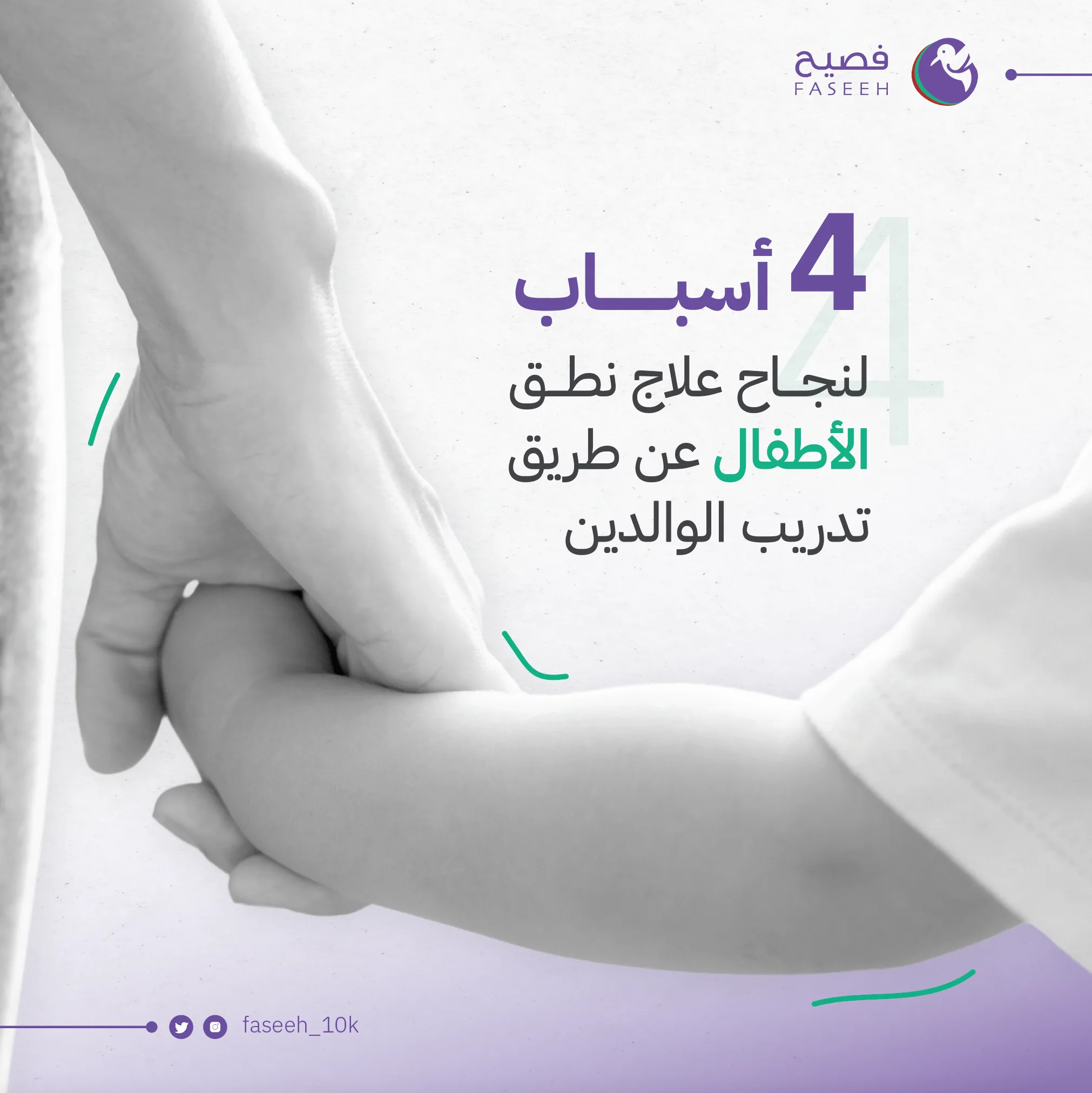
Four Reasons Child Speech Therapy Succeeds Through Parent Training
July 26, 2023
Since speech and language delays are very common, many parents end up consulting specialists to support their child's development. But although speech therapy for children is common, it is not always easy to know what type of support is best for your family—or even what options are available to you. In the Faseeh initiative, we offer families a modern therapy approach by providing virtual speech therapy sessions with specialists certified in working with children and boosting their language development.
Children with speech delays who receive therapy tend to see 34% more improvement than children who do not receive therapy. Speech therapy from an expert is the best step you can take if your child has a delay or disorder, but some approaches may be better than others.
One of the most important early intervention options is training parents to boost their child's speech. This is what we offer, where parents receive coaching from a speech therapist and learn different techniques and strategies to use with their children throughout the day during their regular routine.
Here are the main reasons why this approach is successful with children:
- Parent training is a proven approach
Many studies show that parent training is a key factor in making a difference in children's outcomes—and parents who participate use more language models than parents who do not receive training. When you work with a speech therapist in this way, you learn a number of strategies and understand which exercises are best for your child.
In studies where parents lead the therapy, there are significant positive effects on receptive and expressive language skills, receptive and expressive vocabulary, sentence structure ability, and communication rate. The results of parent training were more significant than in the clinician-led group.
- Children thrive when learning at home with people they know
Speech therapy at home helps when it comes from you as a father/mother, because your child is in their natural environment, interacting with someone they are used to communicating with. In fact, this therapy is so beneficial that the Individuals with Disabilities Education Improvement Act emphasizes the importance of parent-child interactions and mandates that therapy for young children facing difficulties occur in the context of typical, authentic experiences. Therefore, while you might imagine therapy taking place in a professional office away from your daily life, it actually delivers better results when integrated into your regular environment and routine.
- Parents learn skills that make a difference in their children's development
When you begin parent training, you will learn to use systematic language intervention strategies. While that may sound daunting, it simply comes down to focusing on a few common skills, including:
- Responding to your child's communication with you
- Adjusting the way you respond to your child when speaking with them
- Modeling how to speak in scenarios suited to your child
- Using strategies based on your child's interests
When parents use these skills, the results can be profound, with children showing increases in their immediate skill development.
- The ability to apply what you learn during daily routines
Parent training enhances communication between you and your child every single day. You will learn to use specific tactics at home during your daily routine—focusing on what you say and how much you say to your young child. Depending on your child's condition, you may only need coaching once a week to help them make progress.
Parent training is not only effective, but it is also often easy to fit into your schedule. In the Faseeh initiative, we focus on parent training and child speech therapy by offering flexible sessions that can lead to real progress for your little one.
If you are interested in learning more, download the Ynmo Plan app and complete the language assessment tool to receive a consultation with a certified speech therapist, free of charge if needed!
References:
Kashinath, S., Woods, J., & Goldstein, H. (2006). Enhancing generalized teaching strategy use in daily routines by parents of children with autism. In Journal of Speech, Language, and Hearing Research, (Vol. 49, pp. 466–485).
Robertsa, M.,Kaisera, A. (2011) The Effectiveness of Parent-Implemented Language Interventions: A Meta-Analysis.
Originally published in Arabic. This English version was produced with AI-assisted translation; the Arabic original remains the reference.