


Individualized Transition Plan
October 26, 2021
The transition program is a pivotal point between two important stages of life: between a student's life during school, when their focus is tied to education, and life as an independent adult, when their focus centres on work or vocational rehabilitation processes. Transition planning helps youth with disabilities who receive special education services to plan and prepare for life after high school, and an Individualized Education Program (IEP) must include a transition plan. Transition planning begins by the time a child reaches 16 years of age; some countries may begin this process as early as middle school. Regardless of when your child starts, expect that the plan will change over time and will need to be reviewed at least once a year, as you and your child learn more about what the future may hold.
Before preparing the transition plan, you may wonder about:
1. Where will your child work, or how will they be integrated into a college or a job after graduating from high school?
2. How will they continue their education or develop their skills?
3. What community activities will they integrate into? And how will they participate in them?
4. Where will your child live, and what support do they need?
5. What will your child's situation be regarding transportation and mobility?
6. What type of financial support do they need?
There are some matters to consider when planning the transition plan: transition goals in the individualized education program must be outcome-oriented and measurable, students should participate in leadership roles on individualized education plan teams as part of transition planning, and goals must be assessable and linked to what the child wants to achieve after graduation. Transition plans can vary widely in how they are prepared, their length, and their level of detail. Some may be as short as a few paragraphs; others may be a few pages. However, all plans must include the following:
1. A description of your child's strengths and interests.
2. Measurable post-secondary goals (including school, work, and independent living, if necessary).
3. Services to help your child achieve those goals.
Once transition goals are identified, the individualized education plan team will decide what services your child needs to achieve their goals. For example, if your child wants to work as a cashier/clerk in a restaurant, they may first need to learn certain skills in mathematics, reading, communication, and social skills. As a result, the team may need to set individualized education plan goals and provide school services related to these areas, and transition goals related to independent living may include getting your child accustomed to taking on responsibilities. Here are some examples of what your child may learn in adulthood:
1. Arithmetic operations and payment methods (cash/Visa)
2. Knowing conversation etiquette (starting and ending)
3. Dealing with sudden (non-routine) events
4. Recognizing product diversity in order to make suggestions and complaints
5. Setting up and using a calendar, personal appointments, and free time.
Tips for parents:
1. Start planning early and preparing for your child's transition plan.
2. Think about what your child wants to do in their life / their goals / do they want to attend college or get a job?
3. Ensure that your child learns the skills they will need in the job market and in life outside school.
4. If your child will attend an academic college or technical school, you will need to learn about the support that will be available at the college or school.
5. They will need to take the necessary courses to meet college entrance requirements.
Originally published in Arabic. This English version was produced with AI-assisted translation; the Arabic original remains the reference.
Related articles
Is Your Child’s Language Developing Properly?

The Best Mistake I Made as a Special Education Teacher

The Role of Technology in Reducing Teacher Stress
The Golden Difference in My Students' Lives
How Do We Train Parents in Early Intervention?
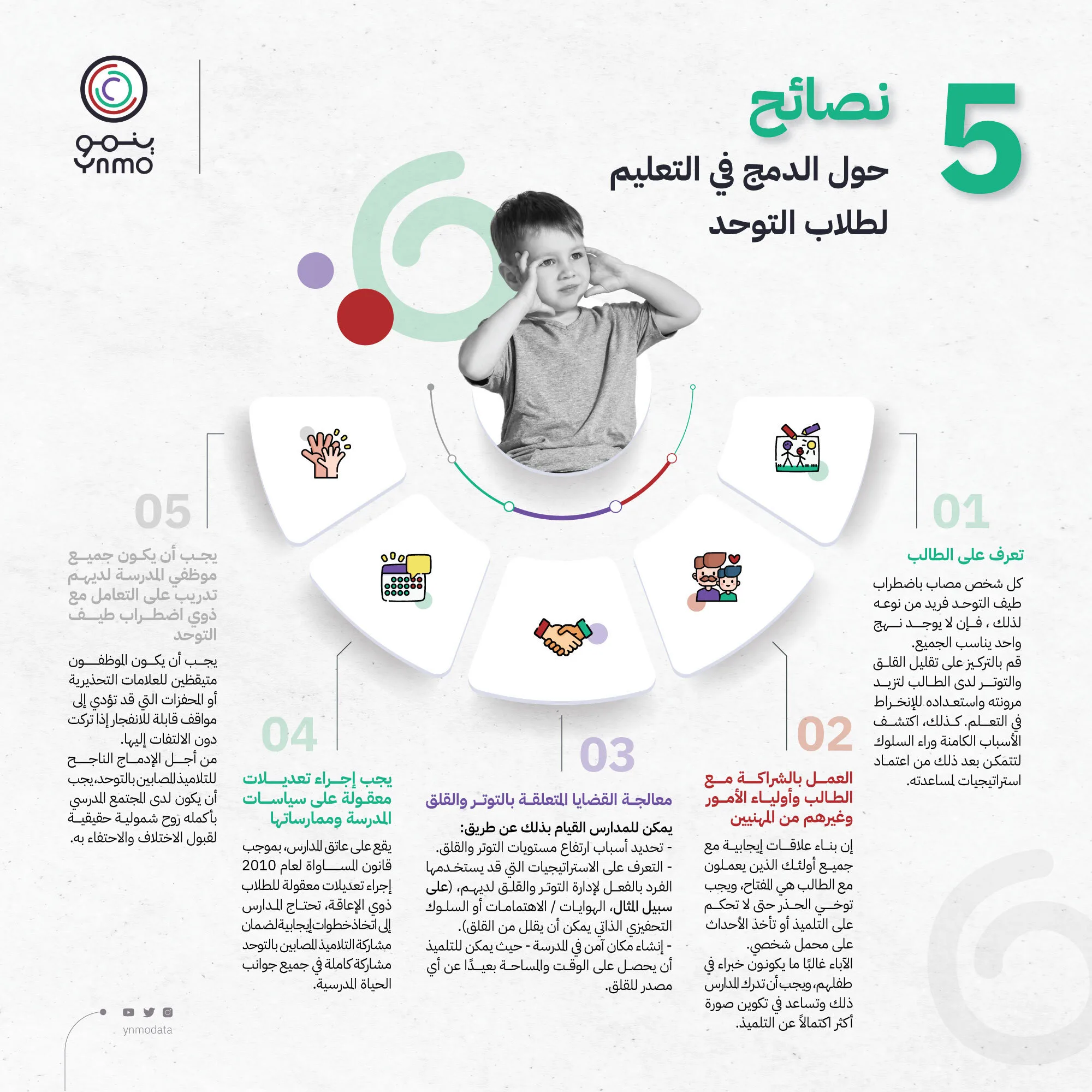
Top 5 Autism Tips: Inclusion in Education