

Top 5 Autism Tips: Inclusion in Education
April 3, 2022
Exclusion rates for children with special needs, including children with autism, in education are higher than for the rest of typically developing children. So, what can be done to reduce the risk of excluding pupils with autism spectrum disorder?
There are no specific strategies schools can use to overcome the barriers preventing inclusion. However, schools may wish to consider the following tips when planning how best to support students with autism spectrum disorder:
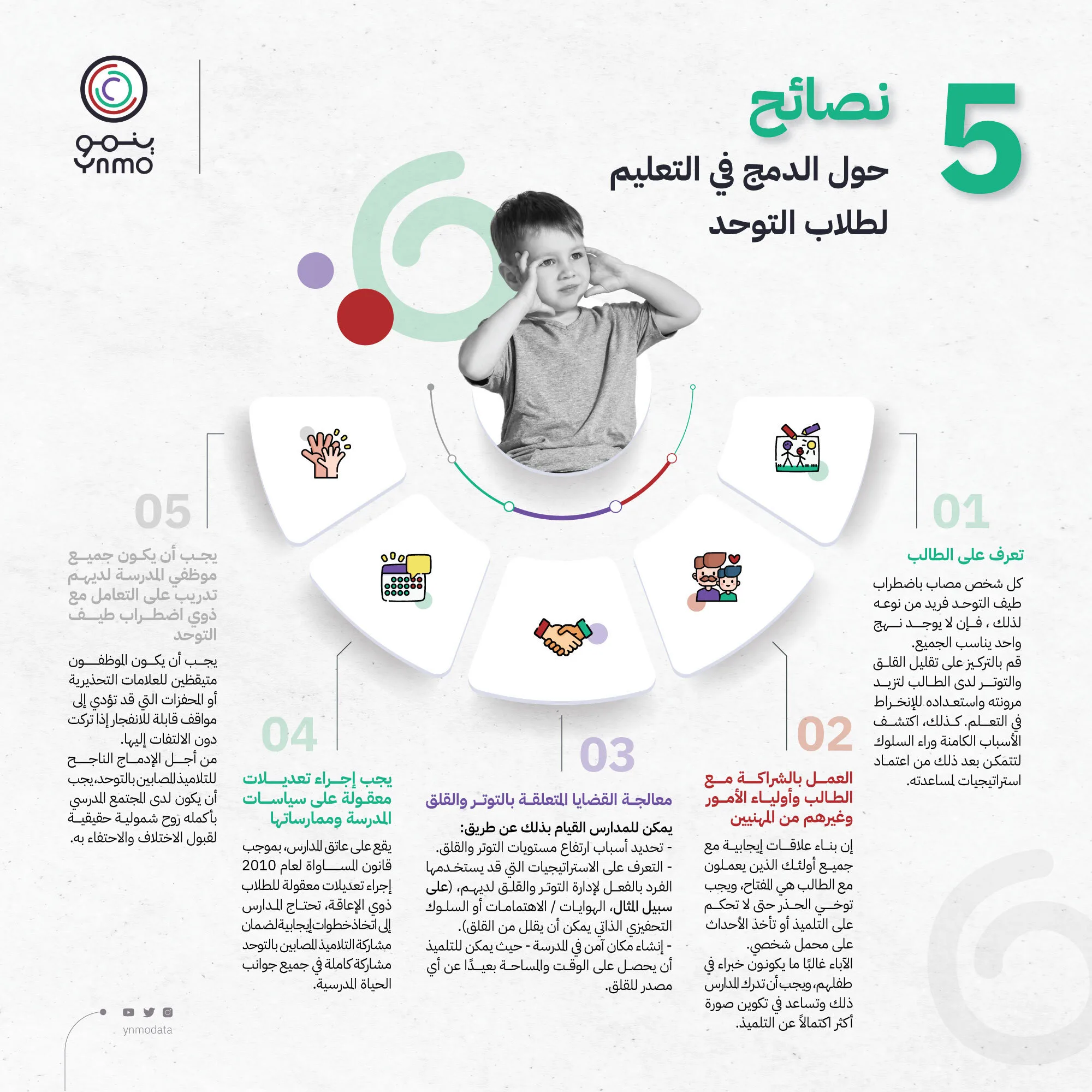
Top 5 Tips
1. Get to know the student
Every person with autism spectrum disorder is unique. Therefore, a one-size-fits-all approach is not appropriate. Listening to the student and trying to understand how they see and experience the world is essential, particularly how autism affects them as an individual. When are they happiest and calmest? What are their strengths? What causes them difficulties in school life?
Focus on reducing the student's anxiety and stress so they can increase their resilience and readiness to engage in learning. Behavior is a form of communication. Find out the underlying causes of the behavior, and you can then adopt strategies to help the pupil student. Although you cannot change the world around them, you can often predict when something is likely to make them anxious and make tailored reasonable adjustments, or take action to avoid it.
2. Work in partnership with the student, parents, and other professionals
Building positive, caring, and accepting relationships with all those who work with the student—including their peers—is vital. Maintaining the relationship and mutual trust is key, and care must be taken not to judge the pupil or take events personally.
Parents are often the experts on their child. Schools must recognize this and help build a more complete picture of the pupil. Staff need to work together as a team, supporting one another, looking for solutions, and clarifying the actions to be taken if a pupil reaches a crisis. Good partnership work across education, health, and care is crucial, with schools collaborating with colleagues from other schools and services, including educational psychology, speech and language therapy, occupational therapy, and autism advisory services.
3. Address issues related to stress and anxiety
Schools can do this by:
- Identifying the causes of heightened stress and anxiety levels
- Recognizing the strategies the individual may already be using to manage their stress and anxiety (for example, hobbies/interests or self-stimulatory behavior – "stimming" – can reduce anxiety)
- Creating a safe space—somewhere in the school where the pupil can have time and space away from any source of anxiety. If space is an issue, it could be a play tent and/or cushions and/or a blanket during times of high anxiety, allowing the individual to access their safe space to self-regulate and calm down
4. Reasonable adjustments must be made to school policies and practices
Under the Equality Act 2010 (and the Disability Discrimination Act 1995 in Northern Ireland), schools have a duty to make reasonable adjustments for disabled pupils. Schools need to take positive steps to ensure that autistic pupils participate fully in all aspects of school life.
5. All school staff must have training on dealing with autism spectrum disorder
To gain a better understanding of how to work with autistic pupils, staff should receive specific training on dealing with autism spectrum disorder appropriate to their role. Staff must be alert to warning signs or triggers that may lead to explosive situations if left unaddressed.
To ensure consistency of approach, it is important to emphasize that any autism training should include all staff. This includes support staff and lunchtime supervisors, who play a crucial role in supervising unstructured parts of the school day that can be a source of difficulty. For the successful inclusion of autistic pupils, the whole school community must have a truly inclusive ethos, accepting and celebrating difference.
Originally published in Arabic. This English version was produced with AI-assisted translation; the Arabic original remains the reference.
Related articles
Is Your Child’s Language Developing Properly?

The Best Mistake I Made as a Special Education Teacher

The Role of Technology in Reducing Teacher Stress
The Golden Difference in My Students' Lives
How Do We Train Parents in Early Intervention?

Students' Return to In-Person Learning Means New Beginnings
How to Ensure the Success of Your Child's IEP?