


From Recommendations to Impact: How Ynmo Contributes to the Outcomes of the 7th International Conference on Disability and Rehabilitation
Innovation and Artificial Intelligence to Empower a More Inclusive Future for Disability Services | October 2026
The 7th International Conference on Disability and Rehabilitation, organized by the King Salman Center for Disability Research, served as a scientific and national platform to discuss the future of services for persons with disabilities, and the role of scientific research, modern technologies, and artificial intelligence in improving quality of life and enhancing access to health, educational, and rehabilitation services.
The conference recommendations reflected a shift from delivering isolated services to building an integrated ecosystem based on early detection, effective intervention, responsible artificial intelligence, and measuring outcomes and impact. This direction aligns with Ynmo’s vision of improving access to developmental and rehabilitation services, empowering families and specialists, and applying evidence-based practices.
From Access to Impact: 1.6 Million Children
The "Ynmo Tifli" initiative represents a national model for leveraging technology to support child development and the early detection of developmental delay. Through integration with the Tawakkalna app and offering the "Check Your Child's Development" service, the initiative was able to expand access to families across various regions of the Kingdom.
The initiative reached 1.6 million children, and the developmental progress of approximately 370,000 children was verified through digital developmental screenings. The significance of these figures lies not only in the breadth of access, but in helping families monitor development and identify indicators that warrant follow-up or specialized support.
Integration with Tawakkalna embodies a model for leveraging digital government platforms to build a developmental pathway that connects screening with consultation, assessment, early intervention, and follow-up.
First: The Health Domain — Early Detection and Integrated Care Pathways
The recommendations emphasized the importance of developing national pathways for early detection, enhancing diagnosis, incorporating genomic and genetic screening into diagnostic pathways and insurance coverage, and verifying the safety and clinical efficacy of artificial intelligence applications.
Contributes "Ynmo Tifli" to empowering families to conduct digital developmental screenings and guiding those who need follow-up or specialized assessment. Ynmo is also working on developing "Sara", a voice AI agent that guides families toward the next step and directs them to book a session with a specialist when needed. This experience represents a transition from offering screening to an integrated, interactive digital journey.
Second: The Educational, Pedagogical, and Social Domain — Evidence-Based Individualized Plans
The recommendations focused on employing artificial intelligence in individualized educational plans, raising the efficiency of teachers and service providers, preparing inclusive environments, and ensuring equitable access to services.
Through the platform "Ynmo Plan" (Ynmo Plan), Ynmo enables specialists to prepare individualized educational and therapeutic plans, define goals, collect performance data, and track progress. It is also working on developing artificial intelligence agents that assist specialists in analyzing assessments, suggesting goals, and building therapeutic and educational plans based on rigorous scientific curricula, in support of evidence-based practices (Evidence-Based Practices).
The goal is to support professional decision-making and tailor interventions to the needs of each beneficiary, while keeping the final evaluation and therapeutic decision in the hands of the specialist.
Third: The Rehabilitation Domain — From Delivering Sessions to Measuring Outcomes
The conference recommendations called for integrating rehabilitation into healthcare levels, expanding community-, home-, and tele-rehabilitation, and training practitioners to use artificial intelligence tools safely.
The Ynmo ecosystem supports access to specialized consultations and interventions, while "Ynmo Plan" enables program planning, session documentation, performance data collection, and goal tracking. Artificial intelligence agents under development contribute to analyzing data and deriving beneficiary progress indicators to guide improvement. For true impact is not measured by the number of sessions alone, but by developmental and functional improvement and quality of life.
Fourth: The Technical Domain — Arabic and Responsible Artificial Intelligence
The recommendations emphasized the governance of artificial intelligence, deploying it within national disability data, localizing assistive technologies, and developing smart health solutions in Arabic.
Ynmo is working on developing an ecosystem of applications and intelligent agents serving families, specialists, and decision-makers: "Sara" to guide families to consultations, agents to support specialists in building evidence-based plans, and agents to analyze data, extract indicators, support planning, and improve service quality.
This path requires privacy protection, data governance, efficacy verification, bias reduction, and maintaining specialized human oversight.
Fifth: The Legislative and Coordination Domain — Service Governance and Sectoral Integration
The legislative and coordination domain represents a complementary dimension to the health, educational, rehabilitation, and technical recommendations; service quality and sustainability require clear policies, effective coordination among stakeholders, and mechanisms to protect the rights of persons with disabilities and ensure equitable access to services. This domain provides an opportunity to develop frameworks for data governance and the use of artificial intelligence, and to link policies to measurable performance indicators.
And through "Ynmo Tifli" and "Ynmo Plan", Ynmo can support this direction by documenting screening, referral, and intervention pathways, tracking plans and their outcomes, and providing aggregated indicators that help relevant authorities understand gaps in access and service quality, while adhering to privacy and data-sharing requirements. Integration with "Tawakkalna" and the "Check Your Child's Development" service also provides a practical example of collaboration between digital platforms to expand access to families.
Ynmo aspires to contribute to enhancing service governance and standardizing procedures in cooperation with regulatory, health, educational, and rehabilitation authorities, without the role of technical platforms replacing the legislative and regulatory responsibilities of competent entities.
From Recommendations to Implementation: Four Priorities for the Future
- Building an integrated national pathway for child development that links screening with diagnosis, early intervention, and follow-up, and reduces fragmentation in the family's journey.
- Expanding the use of responsible artificial intelligence through agents that serve families, specialists, and decision-makers, and enhance the efficiency of implementing evidence-based practices.
- Building an ecosystem to measure outcomes and impact that goes beyond numbers of beneficiaries and sessions to measuring developmental and functional progress, intervention quality, and the family experience.
- Supporting governance and cross-sector coordination by standardizing service pathways, protecting data, and providing measurable indicators that support policies and regulatory decisions.
In Conclusion: From 1.6 Million Children to a More Integrated National Ecosystem
The true value of the recommendations of the 7th International Conference on Disability and Rehabilitation lies in transforming them into actionable, measurable, and scalable solutions. At Ynmo, we take pride in reaching 1.6 million children and verifying the developmental progress of approximately 370,000 children, and we see in these numbers the beginning of a greater responsibility and a broader opportunity.
Our ambition is not limited to digitizing services, but extends to redesigning the journey of the child and family, empowering specialists to deliver evidence-based interventions, and leveraging artificial intelligence and data to improve service quality and outcomes. The future of disability and rehabilitation services is shaped by the partnership of science, practice, technology, and humanity, to transform innovation into sustainable impact.
Originally published in Arabic. This English version was produced with AI-assisted translation; the Arabic original remains the reference.
Related articles
Is Your Child’s Language Developing Properly?
The Best Mistake I Made as a Special Education Teacher
The Role of Technology in Reducing Teacher Stress
The Golden Difference in My Students' Lives
How Do We Train Parents in Early Intervention?
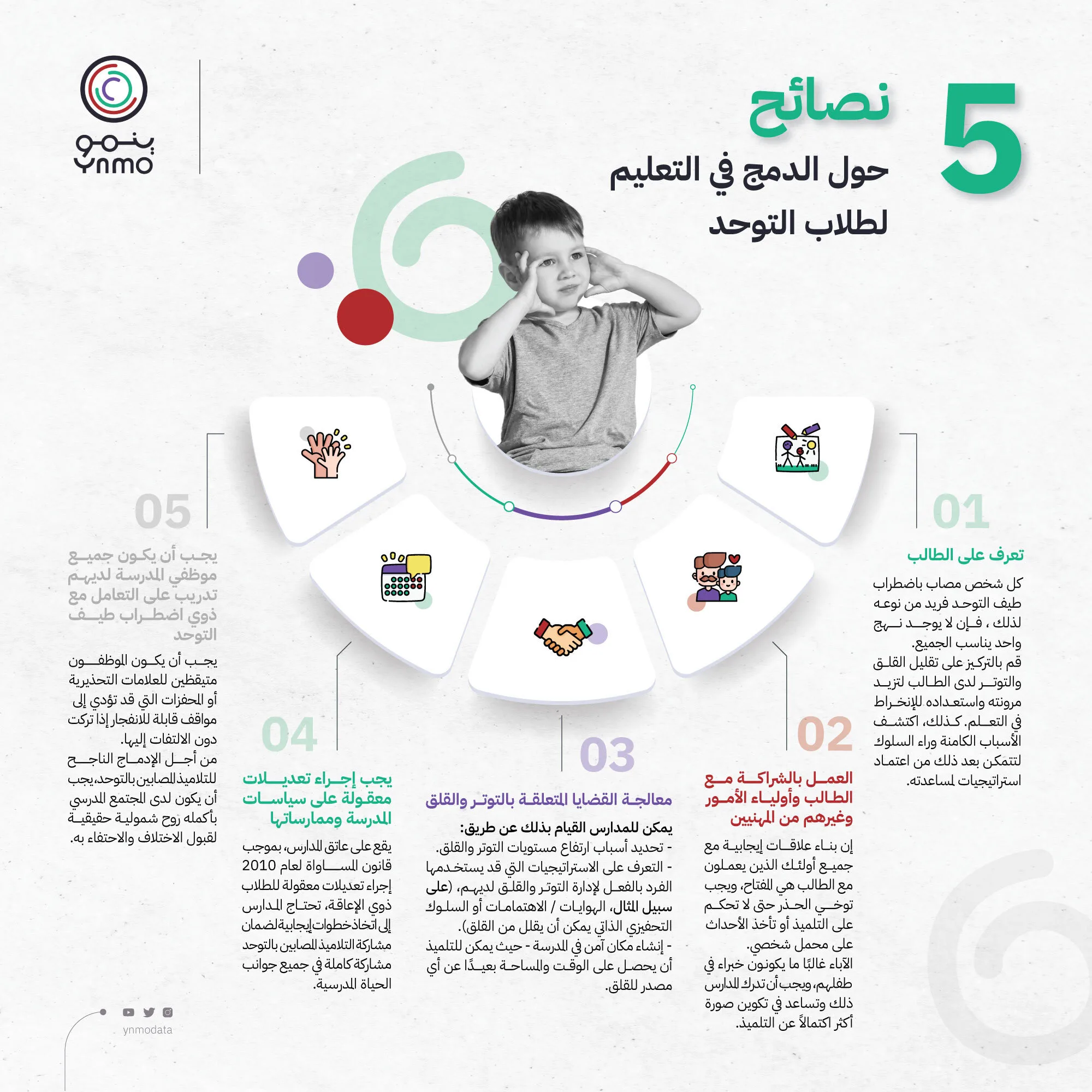
Top 5 Autism Tips: Inclusion in Education