

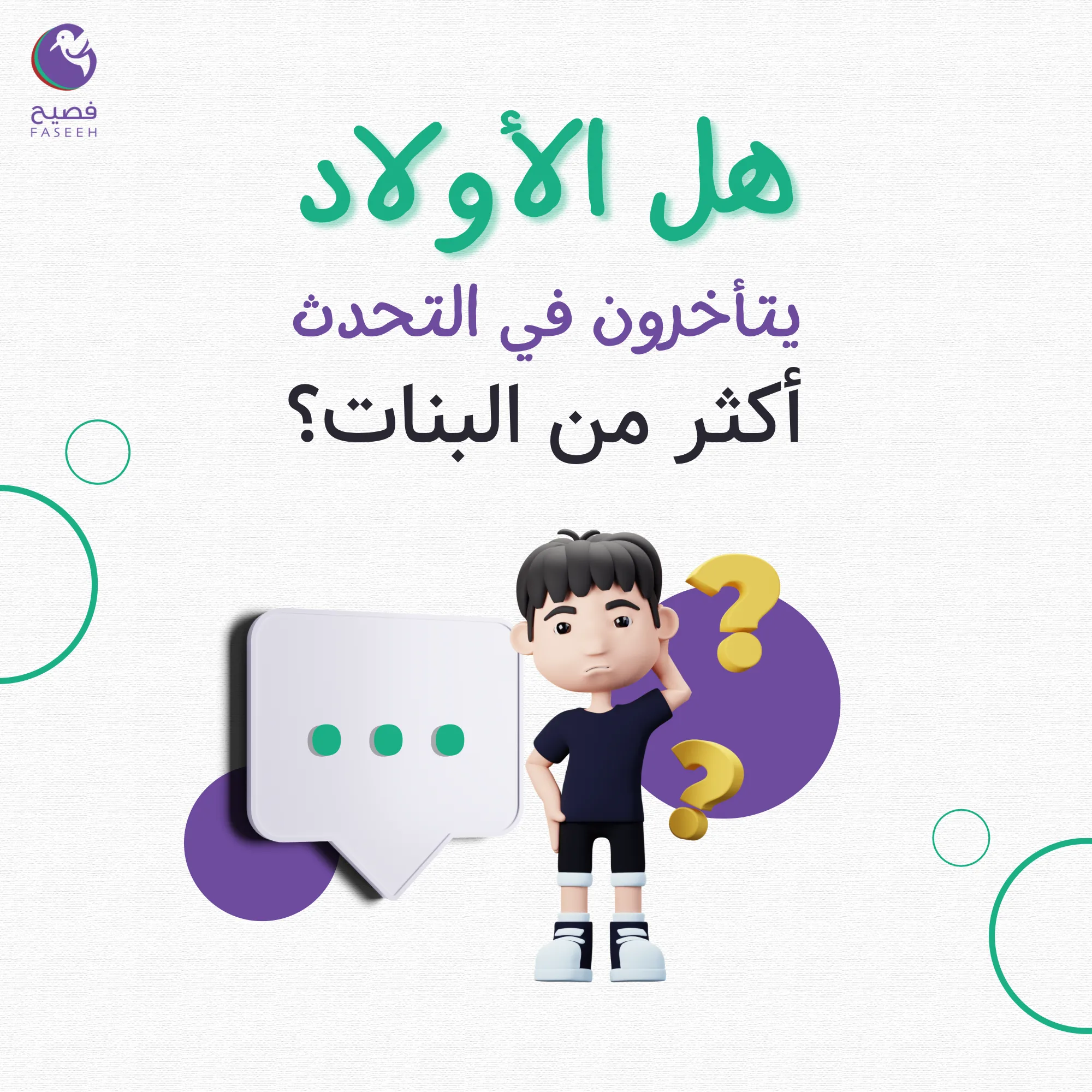
Do Boys Talk Later Than Girls?
December 6, 2022
Written by Talia Leszcz
, Speech-Language Pathologist
There is a common perception that boys develop later than girls—so you might be wondering: is my child speech-delayed, or is this normal for boys? According to Zubrick et al. (2007), boys often produce their first words and sentences later than girls—but these differences are only a matter of a few weeks or months.
A study conducted by Stanford University, which collected data from more than 70,000 children worldwide, showed that boys have a slightly smaller vocabulary size compared to girls at the same age. For example, at 12 months, the average number of words and gestures for girls is 7, but for boys the number drops to 4. Similarly, at 18 months, the average number of words and gestures for girls is 68, and for boys 40.
Boys also tend to produce word combinations about 3 months after girls, with the greatest gender differences appearing most clearly at the points where children tend to master new language skills, and these differences tend to decrease with age. While these differences may seem significant, the variations are not as dramatic as many believe.
According to Adani and Cepanec (2019), language disorders are slightly more prevalent among males than among females. Fisher (2017) confirmed that there is no real difference between males and females in terms of the ongoing risk of speech and language delays. We also know from research by Van Hulle et al. (2004) that environmental factors have a greater impact on language development than genetic factors. Rather than gender, other factors—such as delays in language comprehension or a family history of language, learning, or other disorders—provide a better prediction of your child's risk level regarding language delay.
While male children tend to reach their early language milestones later than female children, being a boy is not the reason for your child's delay. Boys may lag slightly behind girls, but they must still achieve their core language milestones within the expected range.
Are you curious about your child's developmental milestones? Learn about the Faseeh initiative to find out whether your young child's language is on the right track, and if you have any concerns, it is always recommended to act early and seek support from a speech-language pathologist (SLP).
Through the Faseeh initiative, we offer you support and enable early detection of language disorders by taking the accredited language assessment in minutes to check on your child's language level
, and you can also book a free consultation session with a certified speech and language specialist.
References
Fisher, E. Systematic review and meta-analysis of predictors of expressive-language outcomes among late talkers, Journal of Speech, Language, and Hearing Research, 60 (10), 2017, 2935-2948
Adani, S., & Cepanec, M. Sex differences in early communication development: behavioral and neurobiological indicators of more vulnerable communication system development in boys. Croatian Medical Journal, 60 (2), 2019, 141-149
Van Hulle, C., Goldsmith, H. & Lemery, S. Genetic, environmental, and gender influences on individual differences in toddler expressive language. Journal of Speech, Language, and Hearing Research, 47 (4), 2004, 904-912
Zubrick, S.R., Taylor, C.L., Rice, M.L. & Slegers, D. Late language emergence at 24 months: an epidemiological study of prevalence, predictors, and covariates. Journal of Speech, Language, and Hearing Research, 2007, 50 (6) 1562-1592.
Stanford University Wordbank database
Originally published in Arabic. This English version was produced with AI-assisted translation; the Arabic original remains the reference.