


What Comes After Your Child's Diagnosis?
December 3, 2019
You are extremely confused and afraid... feeling as though you have lost control over your life... We see you, we feel for you, and we know that
The diagnosis milestone is usually one of the hardest milestones in your life journey! So much ambiguity and blurred visions around what your child's disorder is: What will their future look like? How will society accept them? Can I educate them like their siblings? And you may enter a spiral of self-blame over any shortcoming that might have caused your child to develop this disorder—which you certainly had nothing to do with!
1. Put fear aside and think of your child... only your child.
2. Have faith in God's decree and give yourself time to adapt to your child's diagnosis,
3. Expand the circle of others' acceptance of your child; involve your child in events accompanying international awareness days. Never isolate your child from society; take them along on your family visits and weekly outings,
4. Give yourself time to learn about organizations and advocates for people with disabilities; you may find them on social media or in charitable associations for families of people with disabilities in your city.
5. Look for a service provider who allows you training on how to interact with your child. There are many who have the passion and generosity to provide information and appropriate educational methods for your child; do not hesitate to reach out to them,
6. Think about your child's future and plan for it starting now, through knowing their interests, inclinations, and strengths and weaknesses. Educate those around you about your child's needs (psychological, social, and educational needs),
7. Your child is capable of learning, but needs twice the time compared to their peers; capable of engaging in society, but needs you to build this step,
8. Believe in your child's abilities, for belief works miracles!
9. Give yourself sufficient time to find out which support, schools, therapies, and environments will help your child succeed,
10. Be flexible in handling your child's needs; you may try many different approaches with your child, and one outcome may be better than another,
11. It is okay, there is plenty you can do with your child until you find the right key to interact with them,
12. Give yourself a chance to learn what the child loves, as you know your child better than anyone else,
13. Learn what they like and what they dislike, what their favorite educational tools are, and what recreational tools they enjoy...
14. There is so much to create with your child, plenty of time to understand them, to give them security, love, and education; just be the world in their eyes.
Originally published in Arabic. This English version was produced with AI-assisted translation; the Arabic original remains the reference.
Related articles
Is Your Child’s Language Developing Properly?

The Best Mistake I Made as a Special Education Teacher

The Role of Technology in Reducing Teacher Stress
The Golden Difference in My Students' Lives
How Do We Train Parents in Early Intervention?
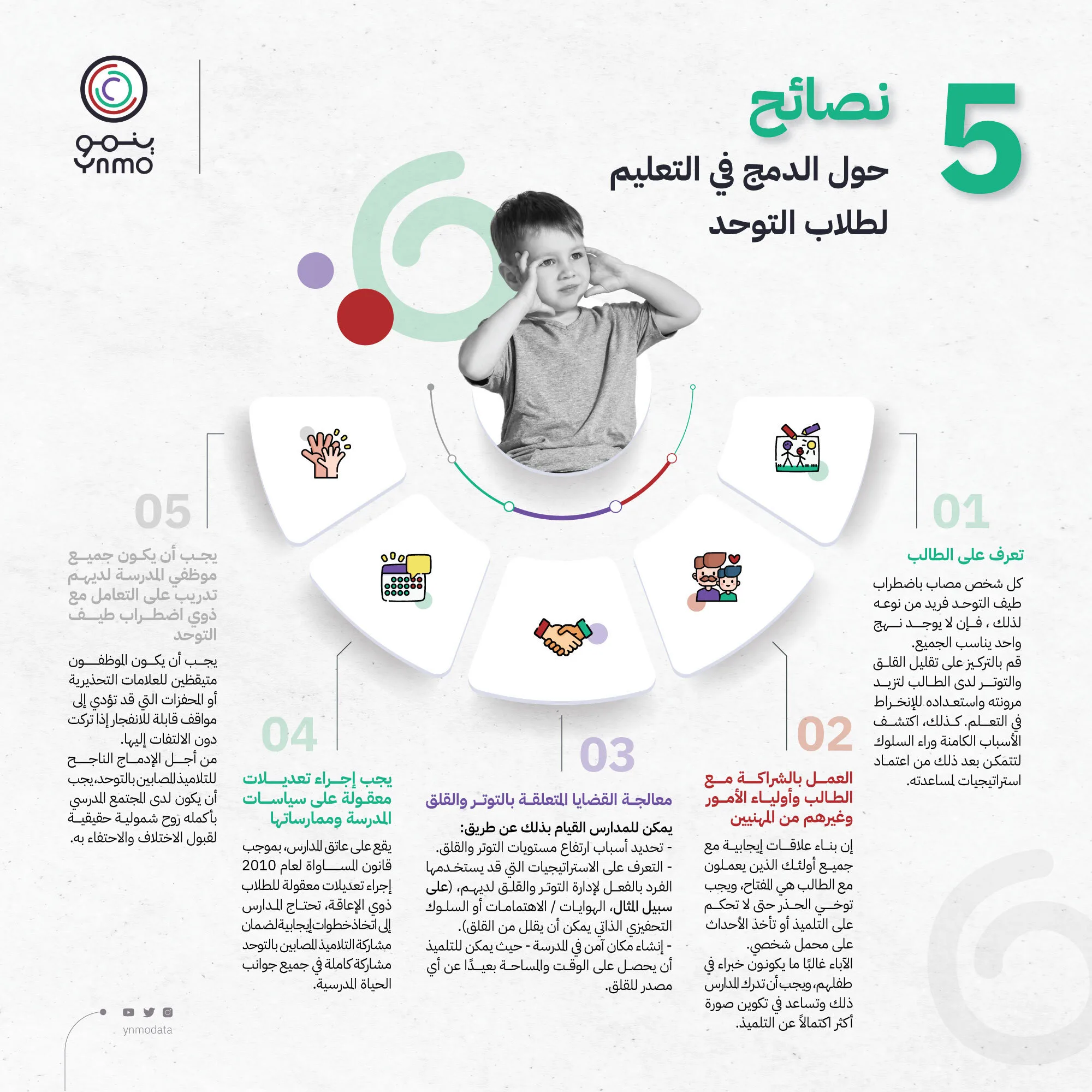
Top 5 Autism Tips: Inclusion in Education