


How to Ensure the Success of Your Child's IEP?
December 12, 2021
With the overwhelming amount of Individualized Education Program (IEP) paperwork, how can you determine whether your child's plan has been written well or not? What are the signs that the set goals are appropriate and helpful in the educational process? Here, we have summarized 5 key elements that confirm for you whether the established plan is complete or not.
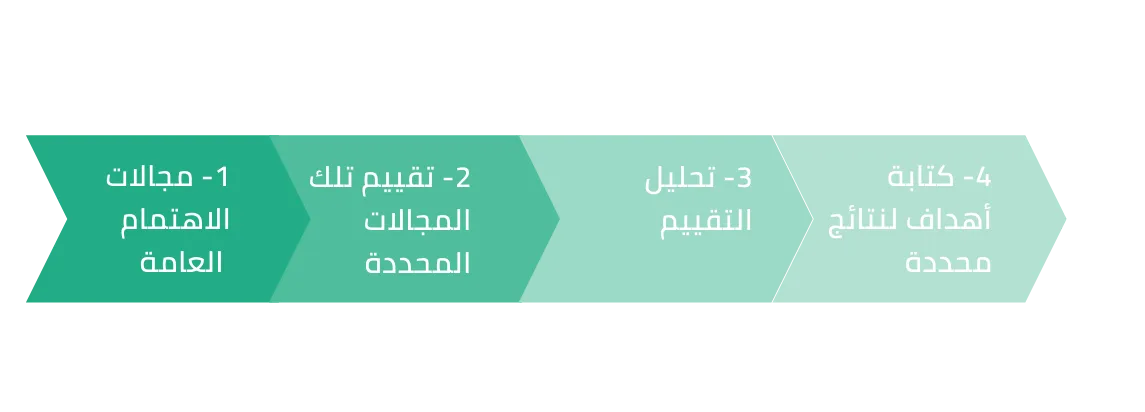
1. Continuity: When the Individualized Education Program is presented, it follows a clear sequence and is based on areas of concern, and aligns with the assessments provided in order to explore the child's areas of need. When presenting the assessment results, these areas are discussed in detail, and the areas where the child struggles and expends effort are examined. This can be gathered using standardized assessments in the annual and triennial (3-year) Individualized Education Program, or through informal assessment. After that, goals are written to address each area of concern.
If you are a practitioner: You can utilize the scales available on Ynmo, which enable you to identify the child's strengths and areas of need so that you can write a successful educational plan based on their needs, such as: the Behavioral Development Characteristics Scale, the Eight Hats Scale.
2. Claims are supported: The Individualized Education Program includes your child's present levels and specifies their current level across all academic areas. One of the crucial elements in improving present levels is focusing on addressing and refining the IEP goals written the previous year, while citing specific evidence showing whether your child achieved each goal or not. In the annual or triennial meeting, parents have an idea of how much progress their child has made toward the goal, as they receive continuous updates throughout the year (via periodic reports). Updating goal progress is not only to know whether it was achieved or not, but it will also include the current level of mastery and proficiency in the child's performance. You can request to view the assessments used to determine your child's present levels, in order to gain a deeper understanding of their performance level.
3. Goals are balanced: While goals align with your child's areas of need as determined by assessments, remember that IEP goals are merely a quick snapshot of your child's progress, and do not encompass everything they will work on in the coming year. Sometimes, writing too many goals can hinder the process, as it becomes difficult for the teacher to balance academic needs and track progress properly. The acronym "SMART" is often used to describe how a well-written goal is formatted: it must be Specific, Measurable in its outcomes, Achievable, Realistic and relevant, and Time-bound. You can also read the article: How to Formulate a Successful Behavioral Goal .
The following diagram provides more details regarding the core elements of a strong educational goal.
4. Information from varied sources: When presenting the Individualized Education Program, it is essential to consider the diversity of evidence supporting its validity. Formal assessments (educational tests) and psychological tests (IQ tests) are the standard, but follow-up testing can also be conducted, in addition to testing in the specific area of weakness. The assessment summary report should not only summarize information about the administered test and scores/percentile ranks, but it must also identify what was observed during testing and what the teacher observes in the classroom, particularly applicable observations consistent with the suspected area of disability.
5. Educational benefit: The key to the success of an Individualized Education Program is year-over-year growth. Through this process, your child's academic and behavioral growth should be evident. This does not necessarily mean that all skills are mastered at grade level, but rather that skills are moving toward mastery, and goals are written to help achieve this growth. If your child struggles in a particular area, goals from one year to the next should focus on incorporating new criteria and skills that build upon one another. If goals seem repetitive year after year and your child does not progress, this may be a sign that your child is not receiving educational benefit, and thus the program and the services provided to them must be evaluated.
Originally published in Arabic. This English version was produced with AI-assisted translation; the Arabic original remains the reference.