



Three Essential Tips for Every Practitioner Working with People with Disabilities
July 8, 2019
Working with people with disabilities is one of the fields of work that most demands focus and patience, requiring numerous organizational and communication skills, as well as the ability to give every day and for every individual case.
Here are useful tips to help you be more organized, communicate better, and learn how to maintain your well-being and care for yourself in demanding work conditions.
1. Be organized
The golden rule in working with people with disabilities is to be organized. Being organized will help your classroom run more smoothly and with less stress; adhering to appointments and schedules—a crucial factor in the success of educational goals—cannot happen without organization.
As a practitioner in this field, you need to develop treatment plans, monitor your students' progress on these plans, complete the educational plan within a specified time, strive to collect data with high accuracy, write your notes, issue regular reports for each student, and conduct periodic evaluations and meetings.
There are several practical solutions that will help you become more organized and less consumed by paperwork:
- Leverage digital solutions.
Try using one of the available digital solutions that help you organize paperwork and lighten the burden of routine tasks.
Tasks such as designing plans, follow-up, and taking notes are no longer as exhausting as they used to be. Today, technology can assist you in designing treatment plans and tracking your students' progress, as well as enabling you to generate student reports with illustrative charts.
Just as technology helps connect people across the world today, it can make your communication with a child's family easier and faster, making their access to their children's reports completely seamless.
Most digital solutions today can preserve your plans and goals indefinitely; all you need to do in the future is refer back to them through your account instead of searching through hundreds of papers and files.
See: Mustaqbal Al Rowad Day Care Center's experience with digital solutions
- Create schedules.
Creating daily schedules and sticking to them helps the child stay calm and maintain a specific routine. Schedules also help you complete goals on time, thereby ensuring the success of the treatment plan, not to mention their usefulness in organizing meeting and interview times with the family.
2. Communicate properly.
Proper and effective communication in working with people with disabilities is one of the most important skills you must acquire and put into practice, whether in communicating with the student's family or with the team.
- Interpersonal skills
Focus on improving your listening skills by giving your full attention to the speaker and understanding exactly what they want; this makes the speaker feel valued and respected, ensuring the message is conveyed clearly.
Another key to improving your communication with others is "objectivity," which entails focusing on the topic of discussion rather than the person you are speaking with, whether it is the family or the team.
Use technology. Digital solutions provide the ability to message parents and share daily reports and notes with them, so make sure to use them because they deliver the message quickly and clearly.
Avoid using specialized academic terminology, especially when speaking with the family, ensure your written and verbal messages are delivered clearly, and give the other party the opportunity to ask questions.
- Continuous communication
Effective communication does not only happen at the beginning and end of the school year; the team and the family must stay continuously informed about the latest updates and progress levels. In this way, you can make any necessary change to the plan quickly without needing to re-establish communication from scratch, thereby avoiding major problems.
3. Take care of yourself.
No one can offer their best if they are not comfortable and able to give, and the importance of this point is even greater in the field of working with people with disabilities.
Here we mention some steps that help you maintain focus and remain able to give:
- Make your teaching life simpler
Break large tasks down into smaller ones and try to reduce your routine work using available digital solutions. For example, instead of designing the entire plan yourself, make use of digital solutions that offer a library of goals and save you time.
- Leave work at the workplace
You will have many unfinished tasks that you would like to take home with you. Don't!
You can do the work the next day instead of bringing stress home with you.
Many practitioners think about classrooms and students when going home and cannot detach themselves from what took place in the workplace. You must keep your self-care a priority and always remember that rest will give you the motivation and strength to work the next day.
In the end, always try to look for solutions that maintain your focus with students and save you time and effort that you can invest in many things that benefit both you and your students.
Was this article helpful? Share it with anyone you think is looking for tips like these.
Prepared by: Ynmo Team
Originally published in Arabic. This English version was produced with AI-assisted translation; the Arabic original remains the reference.
Related articles

Is Your Child’s Language Developing Properly?
The Best Mistake I Made as a Special Education Teacher
The Role of Technology in Reducing Teacher Stress
The Golden Difference in My Students' Lives
How Do We Train Parents in Early Intervention?
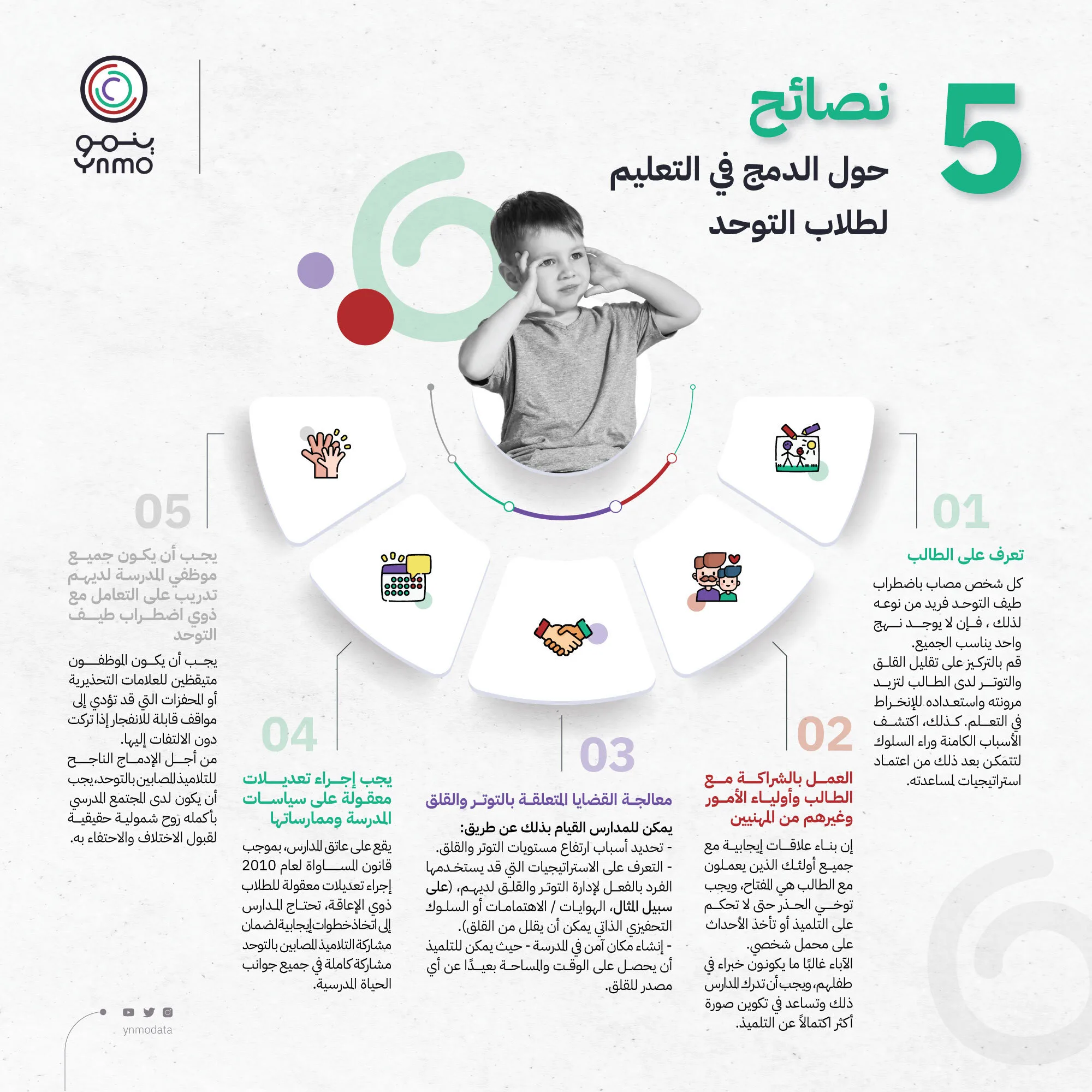
Top 5 Autism Tips: Inclusion in Education