


What Are the Types of Learning Disabilities and How Are They Treated?
October 20, 2021
Before defining learning disabilities or their signs and types, we aim in this article to clarify that there is no relationship between learning disabilities and a person's intelligence. However, a person with learning disabilities may see, hear, or understand things differently. Daily tasks such as studying or focusing in class may be more difficult. If you are a teacher or a parent, this article may be your comprehensive guide in case you face teaching or have a child or student with learning disabilities; there are strategies anyone can learn to make dealing with these differences easier.
Register now to access reliable curricula and assessments
Learning disabilities are a problem that affects how a person receives and processes information. They may have difficulty with any of the following:
Reading
Writing
Math problems
Understanding directions
And there are many different types of learning disabilities, which can affect people differently, and it is important to distinguish that Attention Deficit Hyperactivity Disorder (ADHD) and autism spectrum disorders are not classified as learning disabilities.
Types of learning disabilities include:
Dyspraxia (Dyspraxia)
Motor skills help us move and coordinate, and dyspraxia affects a person's motor skills. A child with dyspraxia may bump into things or have trouble holding a spoon or tying their shoes. As they get older, they may have difficulty with things like writing and typing. Other problems associated with dyspraxia include:
Speech difficulties
Sensitivity to light, touch, taste, or smell
Difficulty with eye movements
(Dyslexia) Dyslexia
Dyslexia affects a person's language processing and can make reading and writing difficult. It can also cause problems with grammar and reading comprehension. Children may also have difficulty expressing themselves verbally and putting thoughts together during conversation.
(Dysgraphia) Dysgraphia
Dysgraphia affects a person's writing ability. People with dysgraphia may experience a variety of problems, including:
Poor handwriting
Trouble with spelling
Difficulty putting thoughts on paper
(Dyscalculia) Dyscalculia
Dyscalculia affects a person's ability to solve math problems. Math disorders can take many forms and their symptoms vary from person to person. In young children, dyscalculia may affect learning to count and recognizing numbers. When the child gets older, they may have difficulty solving basic math problems or memorizing things like multiplication tables.
Auditory Processing Disorder
This is a problem with the way the brain processes the sounds a person receives. It is not caused by hearing impairment. People with this disorder may have trouble with:
Learning to read
Distinguishing sounds from background noise
Following spoken commands
Distinguishing between similar words
Remembering things they heard
(Auditory Processing Disorder) Visual Processing Disorder
A person with visual processing disorder has difficulty interpreting visual information. They may have trouble reading or telling the difference between two similar things. People with visual processing disorder often have problems with hand-eye coordination.
Treatment of Learning Disorders
Special education instruction is the most common treatment for learning disorders. After conducting an evaluation to determine where your child is having trouble, a team of specialized educators will create an Individualized Education Program (IEP) for your child that outlines the special services they need to thrive in school. Special education teachers will then help your child build on their strengths and teach them ways to compensate for their weaknesses.
Many resources are also available outside the public school system, including:
Special schools specializing in treating children with learning disabilities
After-school programs designed for children with learning disabilities
Home tutoring and therapy service
Learning disabilities do not have to be an obstacle to success. With the right tools, people with learning disabilities can overcome any challenge.
Raising a Child with Learning Disabilities
Having your child diagnosed with a learning disability can be overwhelming. Many parents find the process of diagnosing learning disabilities frustrating, and then once the diagnosis comes, they face an uphill battle to provide their child with the help they need.
The best thing you can do as a parent is simply to love and support your child. These tips can also help you assist your child:
1. Learn all you can Get all the facts about your child's learning disability and how it affects the learning process. Research supportive services and strategies so that you can take an active role in determining the right treatment for your child.
2. Be supportive of your child Work with your child's school to develop an Individualized Education Program (IEP), which is a special plan that sets goals for your child and describes the support that may be necessary to reach those goals. Understand special education laws and school policies so you can ensure your child gets the most out of school. Many services may be available, but they may not be provided until you ask for them.
3. Make sure your child has healthy habits A child who gets enough sleep, eats a good diet, and gets plenty of exercise is a healthy child, mentally and physically.
4. Pay attention to your child's mood Learning disabilities can be detrimental to a child's self-esteem. Watch for symptoms of depression, such as mood swings, changes in sleep or appetite, or loss of interest in their usual activities.
At Ynmo, we provide service providers such as schools, centers, and clinics with specialized curricula for learning disabilities, helping teachers and practitioners develop an effective therapeutic or educational plan for children with learning disabilities and easily design and monitor individualized rehabilitation and educational programs.
Adapted translation
.https://www.webmd.com/children/guide/detecting-learning-disabilities
Originally published in Arabic. This English version was produced with AI-assisted translation; the Arabic original remains the reference.
Related articles

Is Your Child’s Language Developing Properly?

The Best Mistake I Made as a Special Education Teacher

The Role of Technology in Reducing Teacher Stress
The Golden Difference in My Students' Lives
How Do We Train Parents in Early Intervention?
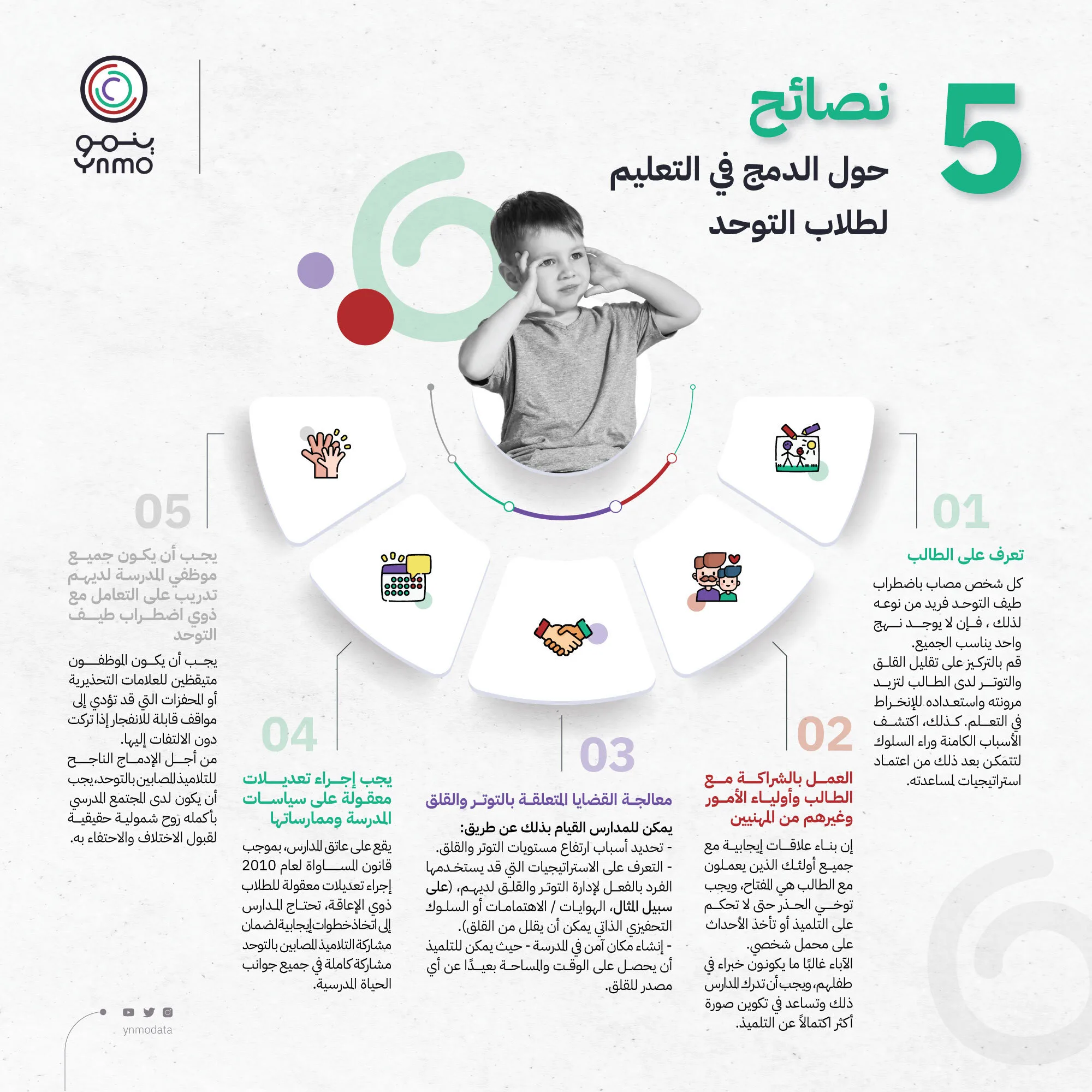
Top 5 Autism Tips: Inclusion in Education