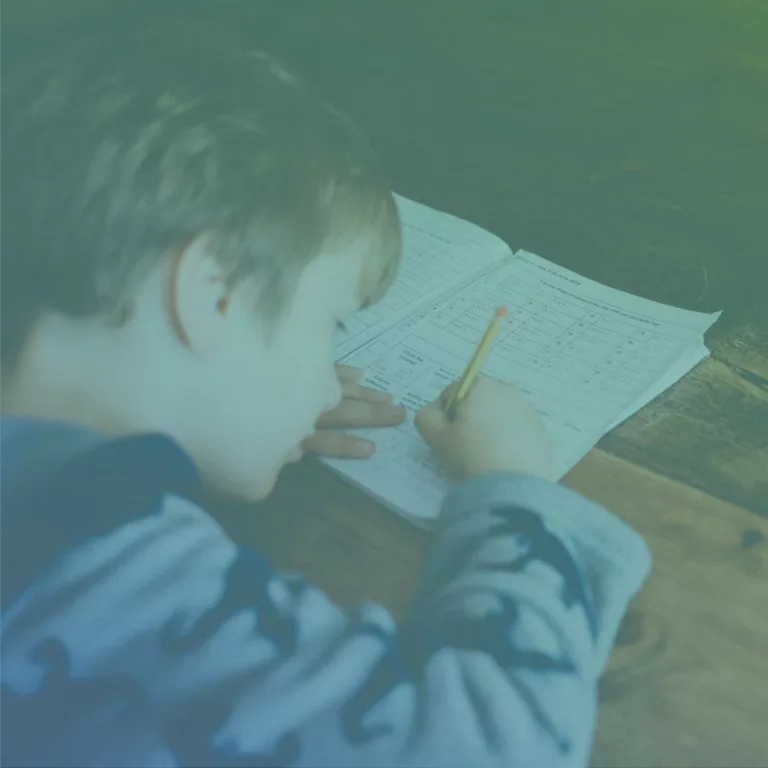


7 Effective Teaching Strategies in the Classroom
June 9, 2020
Classrooms are dynamic environments, bringing together students from different backgrounds with varying abilities and personalities. Being an effective teacher therefore requires implementing creative and innovative teaching strategies in order to meet students' individual needs.
Whether you have been teaching for two months or twenty years, it can sometimes be difficult to know which teaching strategies will work best with your students. As a teacher, there is no "one size fits all" solution, so here is a selection of effective teaching strategies you can use to inspire your classroom practice.
1. Visual Stimuli
Bring academic concepts to life through visual and hands-on learning experiences, helping your students understand how their learning applies in the real world.
Examples include using an interactive whiteboard to display photos, audio clips, and videos, as well as encouraging students to get out of their seats through classroom experiments and local field trips.
2. Cooperative Learning
Encourage students of varying abilities to work together by promoting small-group or whole-class activities.
By verbally expressing their ideas and responding to others, your students will build their self-confidence, in addition to enhancing their communication and critical thinking skills.
Solving mathematical puzzles, conducting science experiments, and acting out short drama sketches are just a few examples of how cooperative learning can be incorporated into classroom lessons.
3. Inquiry-Based Instruction
Pose thought-provoking questions that inspire your students to think for themselves and become more independent learners.
Encouraging students to ask questions and investigate their ideas helps improve their problem-solving skills as well as gain a deeper understanding of academic concepts. Both are important life skills.
Inquiries can be science- or math-based, such as "Why does my shadow change size?" or "Is the sum of two odd numbers always an even number?". However, they can also be subjective and encourage students to express their unique opinions, for example, "Do poems have to rhyme?" or "Should all students wear uniforms?".
4. Differentiation
Differentiate your instruction by assigning tasks based on students' abilities, ensuring no one is left behind.
Assigning classroom activities according to students' unique learning needs means that individuals with higher academic abilities are stretched and those facing challenges receive appropriate support.
This can involve handing out worksheets that vary in complexity to different groups of students, or setting up a series of work areas around the classroom that contain a variety of tasks for students to choose from.
5. Technology in the Classroom
Incorporating technology into your teaching is a great way to actively engage your students, especially as digital media surrounds us in the 21st century.
Interactive whiteboards or mobile devices can be used to display images and videos, helping students visualize new academic concepts. Learning can become more interactive when using technology, as students can physically participate during lessons as well as instantly research their ideas, which develops independence.
Technology can be used in the classroom with students to record results, take photos/videos, or simply as a behavior management technique.
6. Behavior Management
Implementing an effective behavior management strategy is crucial for gaining students' respect and ensuring students have an equal opportunity to reach their full potential.
Noisy classrooms do not foster a productive learning environment; therefore, developing an atmosphere of mutual respect through a combination of discipline and rewards can be beneficial to you and your students.
7. Professional Development
Engaging in regular professional development programs is a great way to enhance teaching and learning in your classroom.
With educational policies constantly changing, it is extremely beneficial to attend events where you can gain inspiration from other teachers and academics.
Being an effective teacher is a challenge because every student is unique; however, using a range of teaching strategies enables you to cater to students' different learning styles and academic abilities, as well as make your classroom a dynamic and motivating environment for students.
What strategies do you use to be an effective teacher? Do you have any important tips? We would love to hear from you.[email protected]
Source
.https://www.quizalize.com/blog/2018/02/23/teaching-strategies/
Originally published in Arabic. This English version was produced with AI-assisted translation; the Arabic original remains the reference.
Related articles
Is Your Child’s Language Developing Properly?

The Best Mistake I Made as a Special Education Teacher

The Role of Technology in Reducing Teacher Stress
The Golden Difference in My Students' Lives
How Do We Train Parents in Early Intervention?
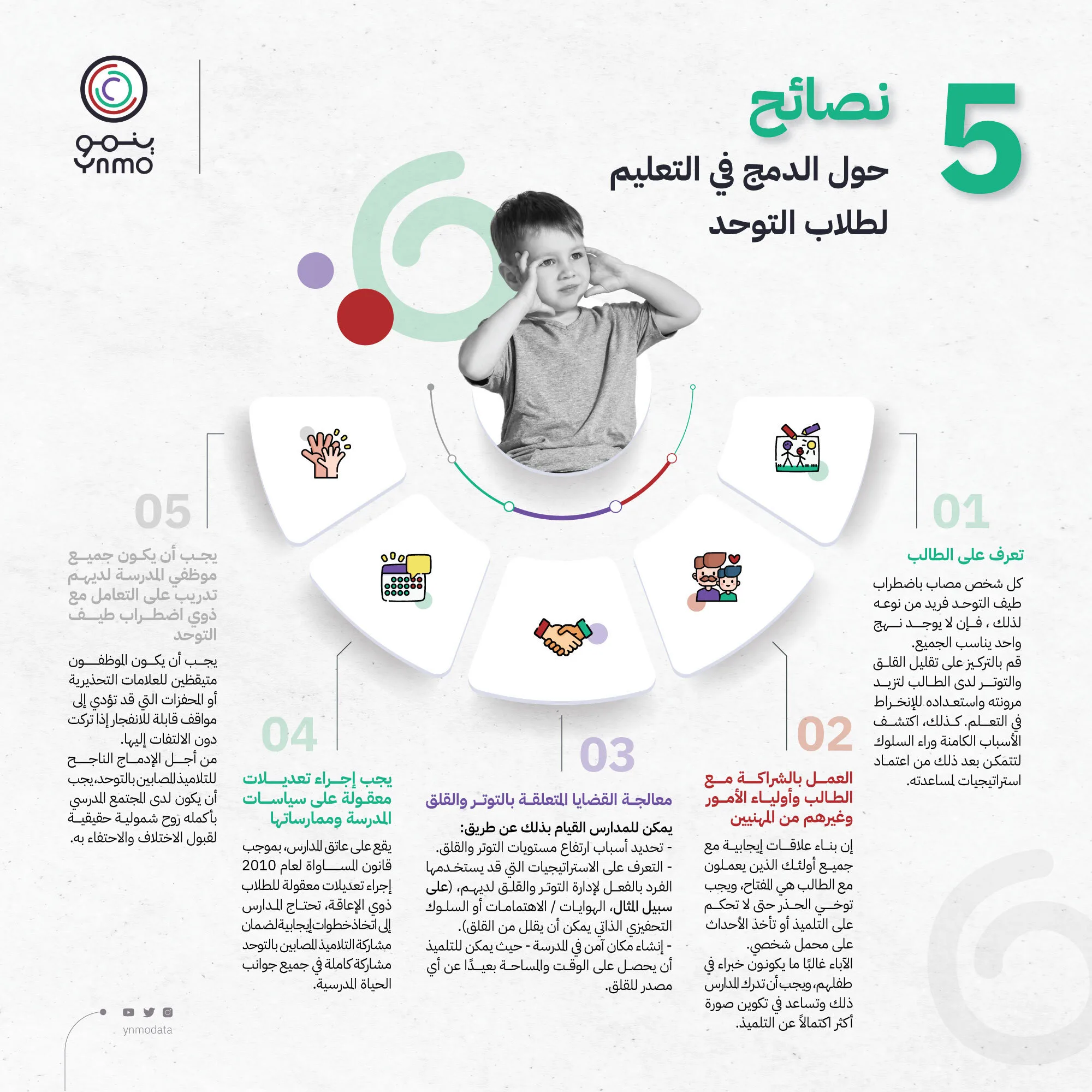
Top 5 Autism Tips: Inclusion in Education