


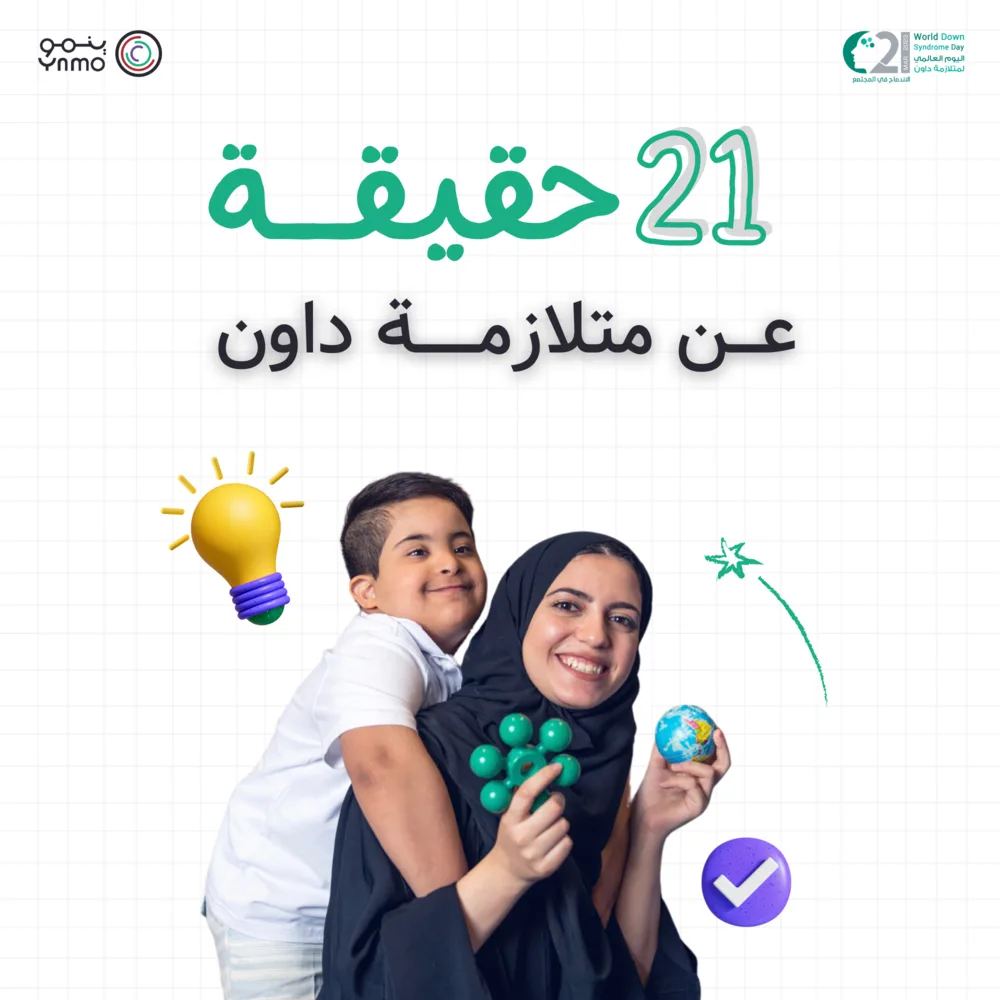
21 Facts About Down Syndrome
October 25, 2021
"Down syndrome" is a genetic disorder that occurs in approximately one in every 700 live births. The cells of individuals with Down syndrome contain 47 chromosomes instead of 46—namely, an extra copy of chromosome 21. "Down syndrome" is considered one of the most common chromosomal conditions.
Here is a collection of important facts to help you understand Down syndrome:
1. Down syndrome is a genetic disorder involving extra copies of chromosome 21; it is not a "disease."
2. Down syndrome is one of the most common genetic disorders.
3. All individuals with Down syndrome have cognitive and intellectual impairments ranging from mild to moderate, which is not an indicator of the many strengths and skills each individual possesses.
4. The likelihood of having a child with Down syndrome increases as maternal age advances. Due to higher fertility rates among younger women, 80% of children with Down syndrome are born to mothers under 35 years of age.
5. Individuals with Down syndrome have 47 chromosomes, unlike individuals without Down syndrome who carry 46 chromosomes.
6. 50% of individuals with Down syndrome are born with heart health problems.
7. One says: a person with Down syndrome, and does not say a mongoloid person or the like, because the disorder happens to the person, so we do not define the person by the disorder.
8. There is no mild Down syndrome and severe Down syndrome; rather, a person is either diagnosed with the disorder or not diagnosed.
9. Contrary to popular belief, individuals with Down syndrome are not always happy; rather, they feel all the emotions that individuals without Down syndrome feel.
10. Children with Down syndrome develop naturally like other children, but milestones such as speaking, walking, and sitting require more time to achieve.
11. Facial features do not determine a person's intelligence, and having more distinctive characteristics of Down syndrome does not mean a person has a lower IQ, and vice versa.
12. Not all individuals with Down syndrome have the same characteristics and abilities.
13. Individuals with Down syndrome are aware of their condition and of their difference from those without Down syndrome.
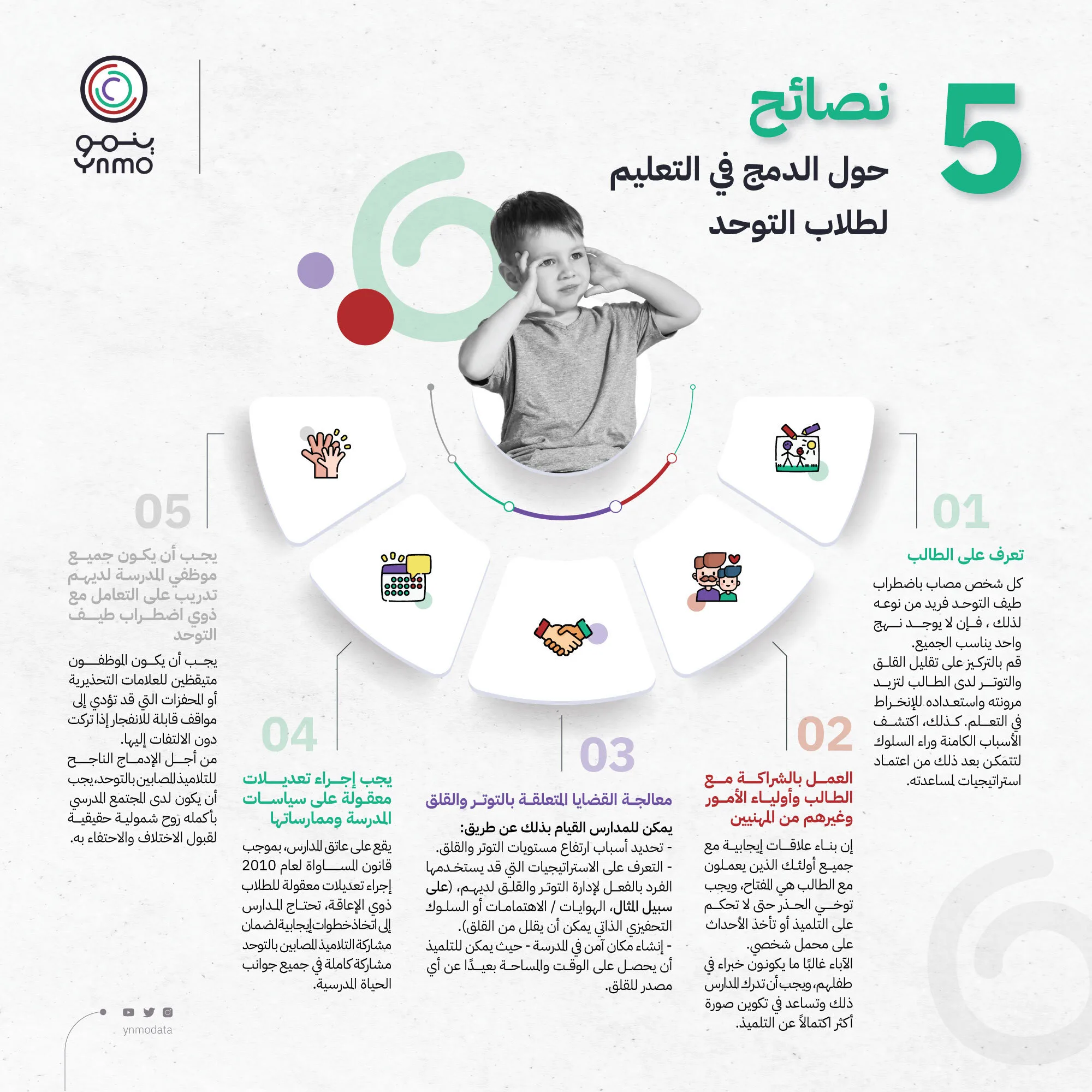
14. Many children with Down syndrome learn better in inclusive educational environments (inclusion with other children).
15. Individuals with Down syndrome are active in their communities, schools, and environments.
16. A number of adults with Down syndrome complete their education, get married, and lead normal lives.
17. Some adults with Down syndrome can live independently of their parents.
18. Individuals with Down syndrome are aware of how people perceive them, and their feelings are hurt because of that.
19. Muscle weakness is one of the challenges facing individuals with Down syndrome, affecting motor skills, speech, and therapy.
20. Terms such as "mentally retarded" and "handicapped" cause harm to the feelings of a person with Down syndrome.
21. Individuals with Down syndrome have many beautiful ideas and meanings to share, so be patient and be a good listener.
Sources:
Related Articles:
Down Syndrome and Early Intervention
Suggest a topic you would like to read about in our articles
Originally published in Arabic. This English version was produced with AI-assisted translation; the Arabic original remains the reference.
Related articles
Is Your Child’s Language Developing Properly?

The Best Mistake I Made as a Special Education Teacher
The Role of Technology in Reducing Teacher Stress
The Golden Difference in My Students' Lives
How Do We Train Parents in Early Intervention?
Top 5 Autism Tips: Inclusion in Education