

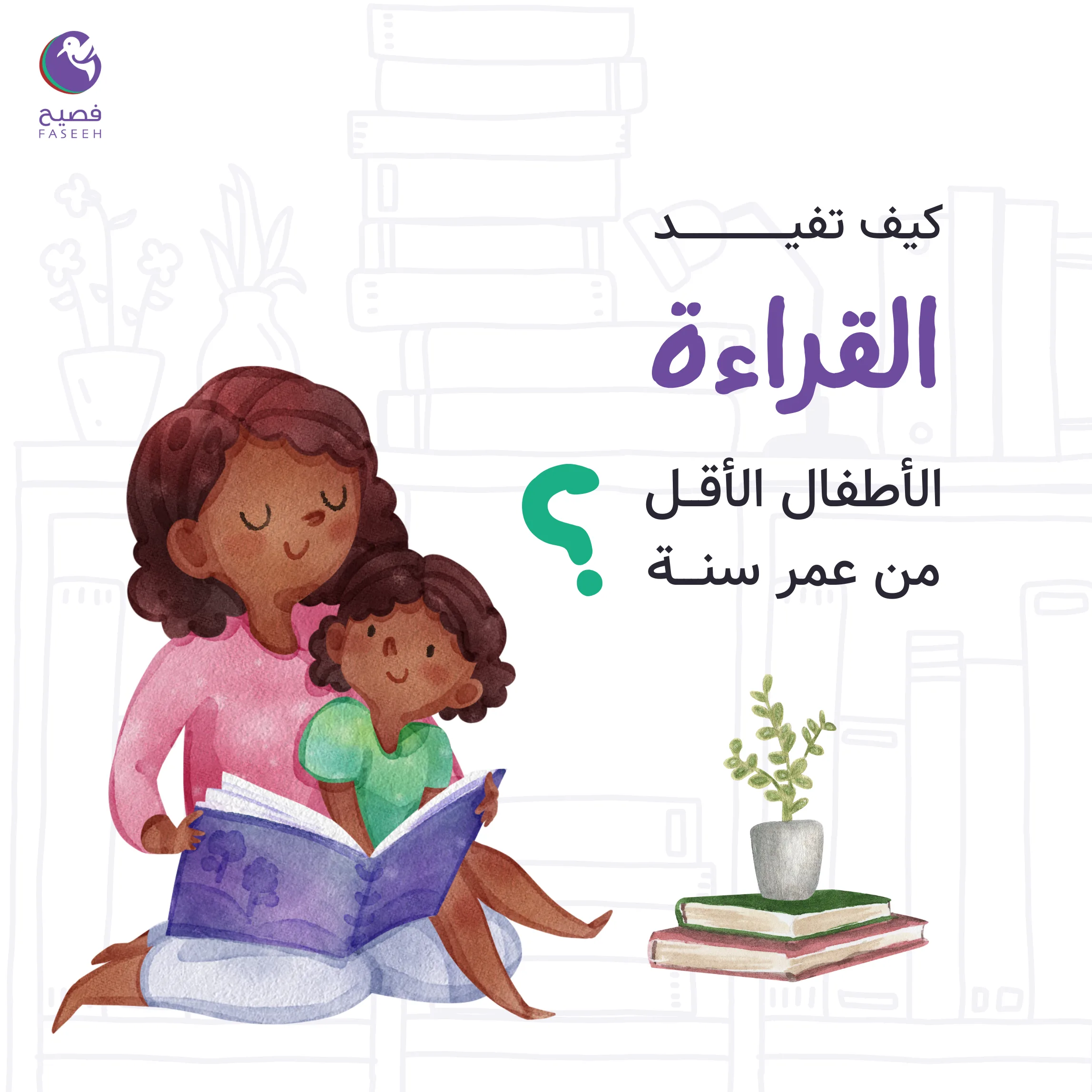
How Does Reading Benefit Babies Under One Year Old?
December 22, 2021
Why do we read to children?
Reading is considered one of the essential language skills your child needs to learn and communicate, and you may have heard that starting to read early is best. Although it may seem that babies are too young to enjoy reading, they learn something new from it at every age stage. Reading in early childhood increases the chances that parents will continue reading to children as they get older, and starting early is also important because the roots of language develop in a child's brain even before they can talk! The more words your child hears over time, the larger their vocabulary becomes.
Your child's age
Books for children
Tips for parents
0–6 months
Start reading books made of cardboard, cloth, or vinyl.
Although your child may seem too young to understand, they enjoy listening to your voice and words. At this age, babies may recognize the routine of sharing books by calming down, widening their eyes, or smiling and kicking to show excitement. Babies at this age will want to explore books with their senses by touching and chewing on the book. They may not pay attention to the entire story, so take a break when they feel bored (such as looking away, rolling back, closing their eyes, crying).
6–9 months
Offer short, simple stories with colorful illustrations—board books are ideal.
Babies may begin exploring books by looking, touching (opening/closing), and sometimes chewing on them. Around 9 months, they may prefer or seem to remember certain stories or pictures. Your child may also continue chewing on books. This is normal behavior and tells us that children want to explore books!
9–18 months
Introduce printed books with simple stories. Stories with repetitive phrases also capture your child's attention. Children at this age love stories containing pictures of other children and familiar objects, such as animals.
Your child may have a favorite story that they ask for. Starting at around 12 months of age, you can begin asking simple questions about the pictures, such as "Where is the moon?", and observe whether your child points or gestures.
18–24 months
Introduce longer stories (perhaps with paper pages, with supervision) with more complex plots.
Do not worry if your child runs away while reading—children at this age need to move. If you continue reading, they will keep listening, and they may come back to hear more. Look for ways to connect your child's energy to the story, such as asking your child to jump like the rabbit in the book. Your child may also be able to name objects with simple sounds or words. For example, "Moo!" when seeing a picture of a cow. For new speakers, get into the habit of pausing before you say a favorite line or phrase in the story to see if your child will fill in the last word. Try pausing before you say a favorite line or phrase in the story to see if your child will complete the sentence.
24–36 months
Your child may be ready for books with regular pages that feature an engaging story (humorous and rhyming) and wonderful illustrations. Non-fiction stories, such as a storybook about animals or seasons, or books discussing jobs such as a doctor, interest children who are working to learn how the world works.
At this age, you can ask more challenging questions about the story, such as "How do you think the baby feels?" or "What do you think will happen?". Build connections between the book and your child's life by asking questions like "The boy in this story played in the park. What did you do in the park today?". By 3 years of age, your child may be able to tell you the story based on what is happening in the pictures. And do not be surprised if your toddler wants to hear the same book over and over again. Children still love repetition and will not tire of the story, even on the seventh time.
Reading to children by ages and stages
Remember that telling your child a story can happen at any time. Try during mealtimes, changing clothes, during car rides, and right before bedtime when you tell "the story of your child's day." Each of these moments creates an opportunity to build a deeper relationship with your child and build their language, reading, and writing skills as well.
A test that helps you know how ready your child is for school
The test aims to measure the level of initial school readiness for children and is designed to detect children who have speech or language issues, which in turn will affect their ability to learn basic academic skills in the early grades at school.
Register now and enjoy many scales and tools
Originally published in Arabic. This English version was produced with AI-assisted translation; the Arabic original remains the reference.