

Developmental Language Disorder
March 1, 2023
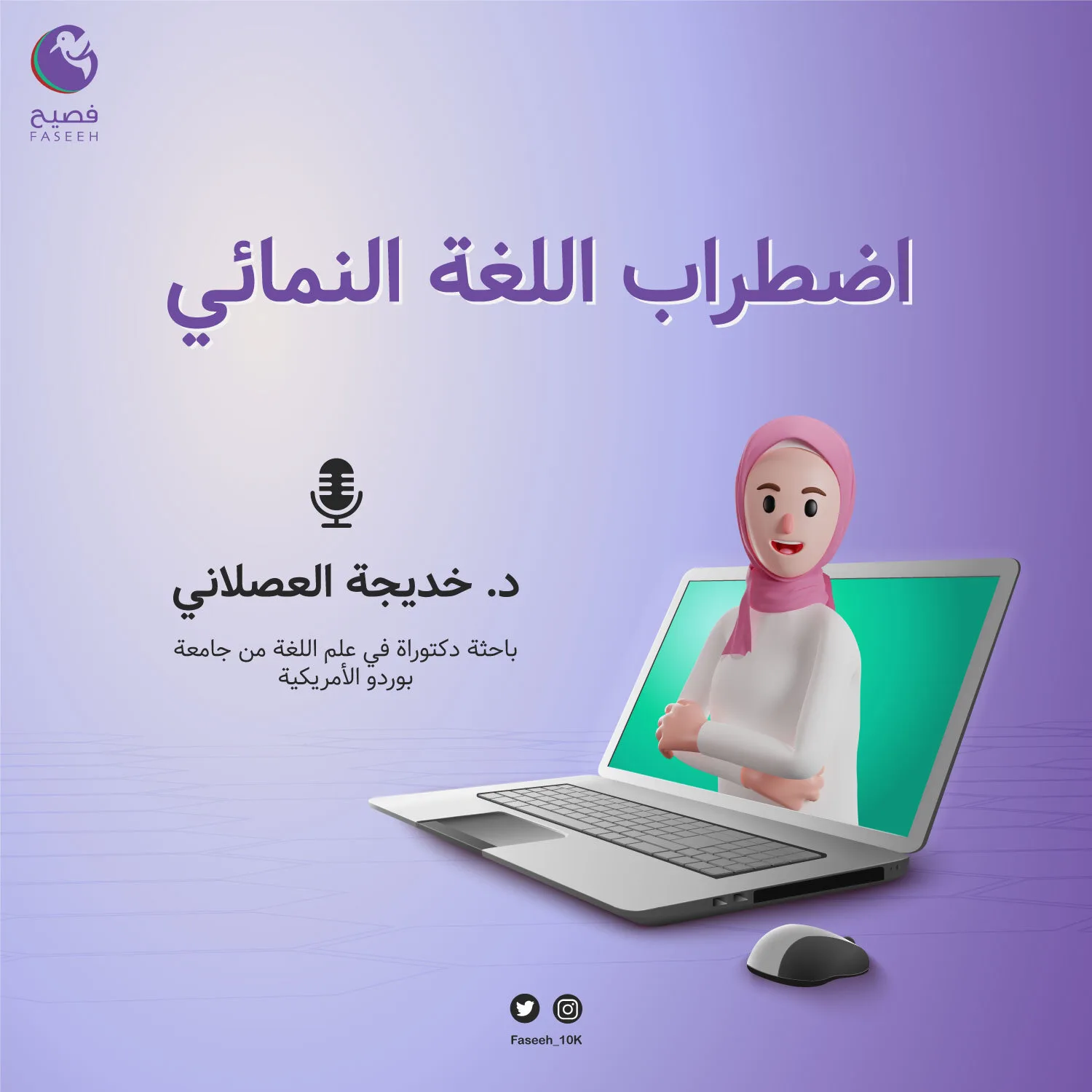
Dr. Khadijah Al-Aslani
PhD in Linguistics from Purdue University, USA
There are many disabilities that cannot be easily identified because they are unseen and invisible. Such disabilities add significant difficulties and challenges to the lives of people who experience them and affect the quality of their relationships and communication with others. Developmental language disorder is one of these invisible, chronic disorders that make social communication a difficult task, representing an obstacle to enjoying a high quality of life and social relationships for people with this disorder, whether children or adults.
Definition of Developmental Language Disorder
It is a disorder that results in chronic and hidden problems, physically unseen, in using and/or understanding language. It is very common, affecting about 1 in every 15 children. This disorder leads to problems and difficulties, including not understanding what others say or difficulty articulating our thoughts to express ourselves when communicating with those around us. Simply put, this disorder is associated with a delay in children's language abilities compared to their peers of the same age group, despite the absence of any other developmental disorders. As a result of this disorder, problems arise in using and understanding language that hinder our interacting with peers, communicating with them, expressing ourselves to them, and even learning in general. Although it is a chronic condition, when addressed with early intervention it improves, thereby enhancing the quality of life of individuals diagnosed with it.
Why are some children affected by developmental language disorder and not others?
The answer to this question is extremely complex and not simple. Despite the vast amount of research addressing developmental language disorder, we still do not know and cannot state with certainty that one specific cause leads some children to develop this disorder rather than others. It is likely that this disorder is the result of several different factors, including:
Traits and characteristics related to the child's biological makeup
The child's genetic makeup may play a role in their developing developmental language disorder, and most likely this disorder may be a genetic hereditary condition. The structure and manner in which the child's brain is formed and the different parts of the brain that feed into one another may also play a role in developing this disorder.
- Cognition and mental abilities
There are individual variations and differences in every child and between one child and another related to mental abilities and the way new information is received and processed. These mental processes are referred to as cognition. For example, we find some children are faster than others in thinking, analyzing, linking information, and even in memorization and comprehension skills. One or all of these differences in cognition and mental abilities may play a role in a child developing this disorder.
- Environmental factors
The environment in which a child grows up plays a role in whether the child develops developmental language disorder or not. A child's environment can increase the risk of developing this disorder or reduce its severity. Here, we must distinguish between an environment deficient in language stimuli and one rich in them, and the relationship between each of them and developmental language disorder. It is a mistake to believe that the presence of the disorder has a direct and explicit connection to a lack of language stimuli in the child's environment, and that a child will develop this disorder if their parents do not talk to them enough.
To date, we cannot assert that a single factor or even several factors mentioned above are the direct and primary cause of the presence or absence of developmental language disorder. It is likely that the disorder is the result of various interconnected factors.
What types of language problems does a child/person with developmental language disorder experience?
It is important to agree that language is an extremely complex skill and ability so that we can understand the types of challenges faced by a child or person with developmental language disorder. These difficulties may also vary from one child to another and may undergo changes as the child grows older. But overall and in general, here are some common language problems that children and adults with developmental language disorder may experience:
- Difficulty using correct grammatical rules and structures. For example, a child with the disorder might say a sentence like: "He plays outside last night" instead of "He played outside last night." In this example, we see that the child had difficulty using the past tense form of the verb to indicate that it happened in the past. This is just one grammatical error among several other errors children may make, which vary depending on the language the child speaks and its specific grammatical system.
- Difficulty distinguishing or pronouncing certain sounds. This type of challenge is noticed more in younger children than in older children. For example, children with developmental language disorder may omit certain syllables of some words (a child might say "teekh" instead of "batteekh"). These children may also use incorrect syllables when pronouncing specific words (a child might say "ahmal" instead of "ahmar").
- A small and limited vocabulary repertoire. Children diagnosed with developmental language disorder may have a smaller vocabulary compared to their age peers. Young children with this disorder may also be delayed in speaking their first words compared to other children and may take longer to learn new words or even recall them. It is also possible that the problem of recalling certain words persists for a long period of time. Furthermore, difficulties in utilizing vocabulary may persist in children diagnosed with the disorder, hindering them from properly learning that some words have more than one meaning.
- Problems related to the correct and optimal use of language in various social situations. Children may face a problem and obstacle to their ability to follow a conversation about or understand a topic, or even diverge from it or attempt to change it. There are also other problems related to children's ability to take turns in conversation or even understand or produce long and complex sentences. They may also find it difficult to use words for expressing feelings, facing a challenge in expressing themselves. Frustration and anger are some negative feelings that children may experience, which they may only be able to express through unacceptable negative behaviors.
Well, how can we help a child with developmental language disorder?
It is extremely important to realize that seeking appropriate support is essential and very important, and only happens through visiting a qualified and licensed speech-language pathologist, given their effective role in making a big difference in the lives of children with this disorder.
As parents, we must also always take the first step toward our child receiving a proper diagnosis and appropriate help if a problem exists. Although we have agreed that the characteristics of developmental language disorder may vary from one child to another, we must agree that working together and not ignoring the warning signs that may indicate the presence of the disorder is extremely important. Among these warning signs are academic difficulties in the child, as language is an important factor and plays a fundamental role in helping us comprehend and understand every subject. Another warning sign is noticing lower language skills in our children compared to their age peers. Here, we point again to the very significant and important role of early intervention in helping children and improving their language skills, and consequently their quality of life and communication inside and outside the classroom. Furthermore, by raising cultural awareness about developmental language disorder, we emphasize our important role in collaborating and sharing accurate information about this disorder, which helps make it less mysterious. We all share the responsibility of sharing what we know about developmental language disorder with others, so that we, along with researchers and specialists, can continue working hard every day to help make life easier for children affected by this disorder.
Do not forget that you can benefit from the certified language assessment available on the Ynmo Plan app to diagnose your child's condition and detect language disorders early. You can also follow our social media pages to keep up with the latest methods to stimulate your child's language and help them progress.
Download the Ynmo Plan App
Originally published in Arabic. This English version was produced with AI-assisted translation; the Arabic original remains the reference.