


What Should Awareness Look Like During Autism Month?
October 31, 2021
The author summarizes a set of ideas regarding what “autism awareness” should be:
1. “Autism awareness” must be through knowing effective treatment methods that have been scientifically proven effective, as well as knowing other methods that have no scientific basis. There are more than 400 methods promoted as helping autistic individuals. There is no doubt that accessing appropriate treatment methods and obtaining scientifically referenced information are among the challenges parents face.
2. “Autism awareness” starts with all individuals surrounding autistic children: fathers, mothers, siblings, teachers, therapy providers, administrators, and program coordinators share the responsibility of making decisions regarding effective early intervention, not just parents. Many autistic individuals do not receive effective therapeutic services, but rather receive poor services. The author points out that every minute or dollar wasted on ineffective intervention is in fact a waste of time and a drain on resources.
3. “Autism awareness” must be through knowing accurate information available on the internet and verifying reliable, scientifically referenced sources.
4. “Autism awareness” lies in the importance of the role of journalism and media in providing accurate reports and information about autism. Unfortunately, the media often focuses on unproven and ineffective methods. In contrast, effective methods are marginalized and not highlighted. The author believes that it is difficult for conditions specific to the autism community to improve in the absence of a correct and accurate portrayal describing autism in the media.
5. “Autism awareness” means newly diagnosed autistic children accessing effective early intervention services as early as possible. Early intervention makes a major difference, such as improving children's school readiness and saving an enormous amount of resources.
6. “Autism awareness” means instilling hope for a better tomorrow for individuals with autism disorder through providing appropriate services. Research has proven the effectiveness of interventions such as Applied Behavior Analysis. Here, the author emphasizes that we must focus our discussions on how to help autistic individuals live and work independently, and also help them reduce the behavioral challenges they face. It is not in the best interest of individuals with autism for our conversations to be about curing autism.
7. “Autism awareness” means supporting service providers to use proven scientific methods. The author believes it is necessary to use scientific methods through which objective goals can be built, data collected, and results measured.
8. “Autism awareness”: it is important to recognize that there is a great deal of research whose findings service providers can review and benefit from. For example, if service providers want to find solutions to improve conversation skills or enhance academic skills, they can refer to recent research related to those topics.
9. “Autism awareness” means knowing and identifying the challenges faced by families of individuals with autism. The author explains here that there are many challenges, such as families and their children not being invited to events or autistic students not interacting with their peers. The author points out the importance of integrating individuals with autism into various religious, social, and recreational activities.
10. “Autism awareness” means realizing that hundreds of thousands of autistic children today will become hundreds of thousands of adults in the coming few years. The author points out the scarcity of services available for autistic adults and the absence of clear strategies to bridge the gap between the growing, unequipped-for need of this age group.
The author concludes his article by emphasizing the importance of genuine awareness of autism spectrum disorder, which contributes to improving the lives of these individuals and their families.
Originally published in Arabic. This English version was produced with AI-assisted translation; the Arabic original remains the reference.
Related articles
Is Your Child’s Language Developing Properly?

The Best Mistake I Made as a Special Education Teacher

The Role of Technology in Reducing Teacher Stress
The Golden Difference in My Students' Lives
How Do We Train Parents in Early Intervention?
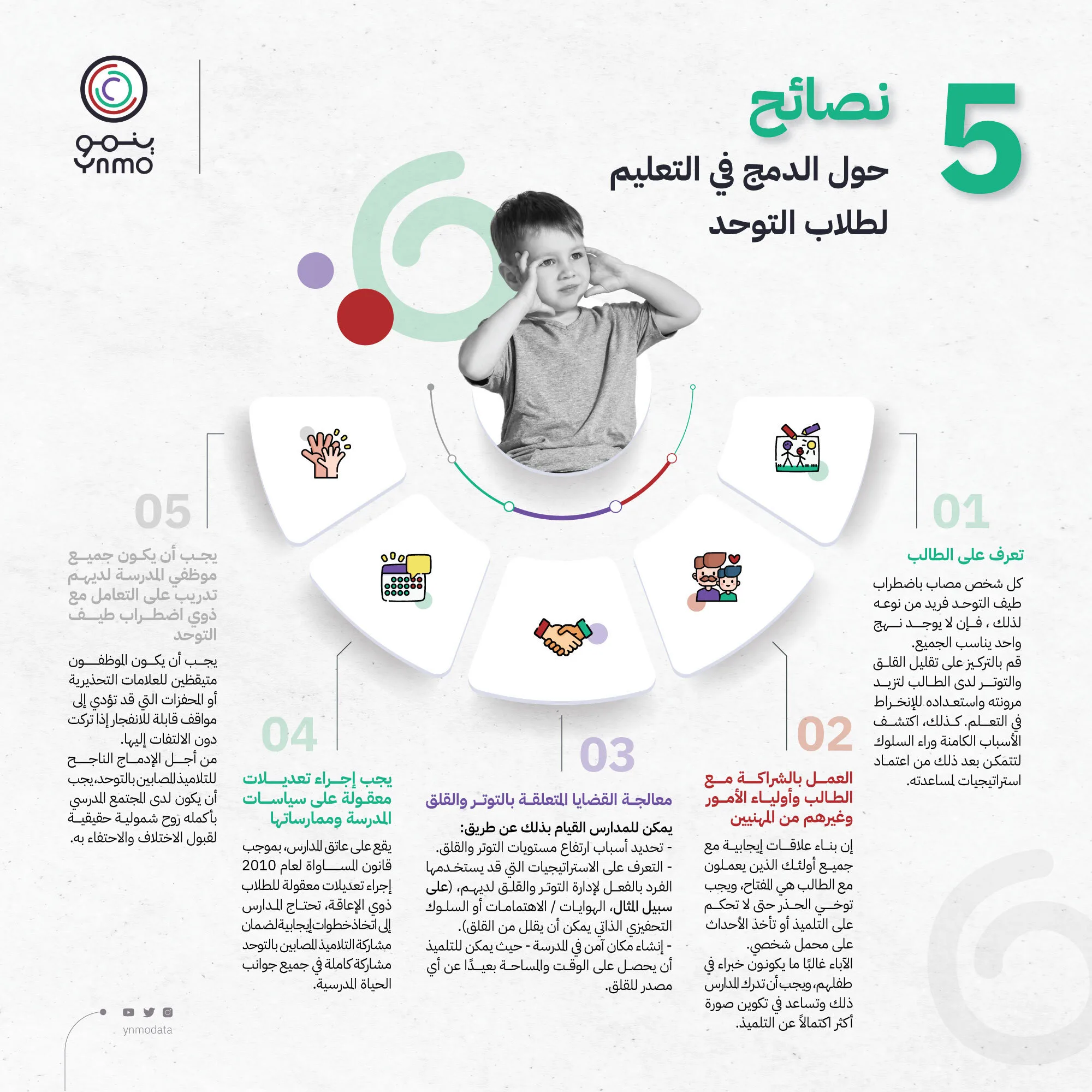
Top 5 Autism Tips: Inclusion in Education