


Behavioral Characteristics Progression Scale
November 29, 2020
A few days ago, a strategic partnership was announced between Ynmo and VORT to make the Behavioral Characteristics Progression (BCP) scale available as one of the assessments provided on the Ynmo platform starting in early December. The BCP scale is an assessment tool for the abilities of children and adults with disabilities, supported by a system for preparing and tracking the progress of individualized education programs for students with disabilities. In this article, we answer some questions about the Behavioral Characteristics Progression (BCP) scale:
How was the Behavioral Characteristics Progression scale developed?
The Behavioral Characteristics Progression (BCP) was developed by the Special Education Department of the Santa Cruz County Office of Education, California, United States of America. It was standardized with more than 100 special education teachers to serve as an assessment tool and a system for preparing individualized education programs.
What is the assessment and what domains does it cover?
The Behavioral Characteristics Progression (BCP) scale is a criterion-referenced assessment and an educational and habilitative planning system used with children and adults. It is considered a non-standardized continuum of skills. It contains 2,300 observable skills referred to as "behavioral characteristics," divided into 56 strands categorized into 7 main domains: Cognitive, Language, Fine Motor, Gross Motor, Social, Independence, and Self-Care. A strand typically begins at age one (Skill #.01) and progresses toward more complex skills, ending with skills developmentally appropriate for those around 14 years of age. There are no age categories for BCP skills, so an individual's abilities and needs can be determined regardless of age. The BCP is not considered a formal "test" and cannot be used to "grade" a student, but is rather used to identify a target skill and plan for teaching it. There are activities for 1,900 of the 2,300 BCP skills. Behaviors/skills are categorized into 56 strands/long-term goals. A single strand can contain up to 50 behaviors/skills. A skill is identified by its strand. If the skill number is, for example: 04.03, this means the fourth strand (04) and the third skill (or 03). Instructional activities are used alongside the BCP assessment. The assessment is used to identify student needs, target goals (skills), and track/record progress. BCP skills and activities cover a wide range of ages and may be administered to a child or an adult, depending on developmental age. Therefore, the terms "student" and "individual" were used to refer to children and adults, and the content was written in the masculine form to avoid repetition.
What are the identifying behaviors of the Behavioral Characteristics Progression (BCP)?
The Behavioral Characteristics Progression assessment contains a list of "identifying behaviors"—behaviors that may indicate an individual's needs for further assessment and instruction in the associated domain. Identifying behaviors can be used as an initial screening tool for the areas most critical to the student and can help the teacher focus on core areas of need and prioritize target skills.
What are the uses of the Behavioral Characteristics Progression scale (BCP)?
There are several uses for the Behavioral Characteristics Progression scale, as follows:
- As a comprehensive assessment tool for all the skills the student can and cannot perform.
- As a system for developing the individualized education program for a student with disabilities.
- As a record for the student throughout their school enrollment to showcase their progress and help convey this information to everyone involved in the student's individualized education program.
Important note: The BCP scale must be used under the direct supervision of a qualified specialist. For example: language/communication skills must be reviewed with a speech-language pathologist, and motor skills with a physical/occupational therapist. You can take advantage of all the features of the Behavioral Characteristics Progression scale through the Ynmo platform. Subscribe now! Determine your students' performance level and design individualized education programs in record time!
Originally published in Arabic. This English version was produced with AI-assisted translation; the Arabic original remains the reference.
Related articles
Is Your Child’s Language Developing Properly?

The Best Mistake I Made as a Special Education Teacher

The Role of Technology in Reducing Teacher Stress
The Golden Difference in My Students' Lives
How Do We Train Parents in Early Intervention?
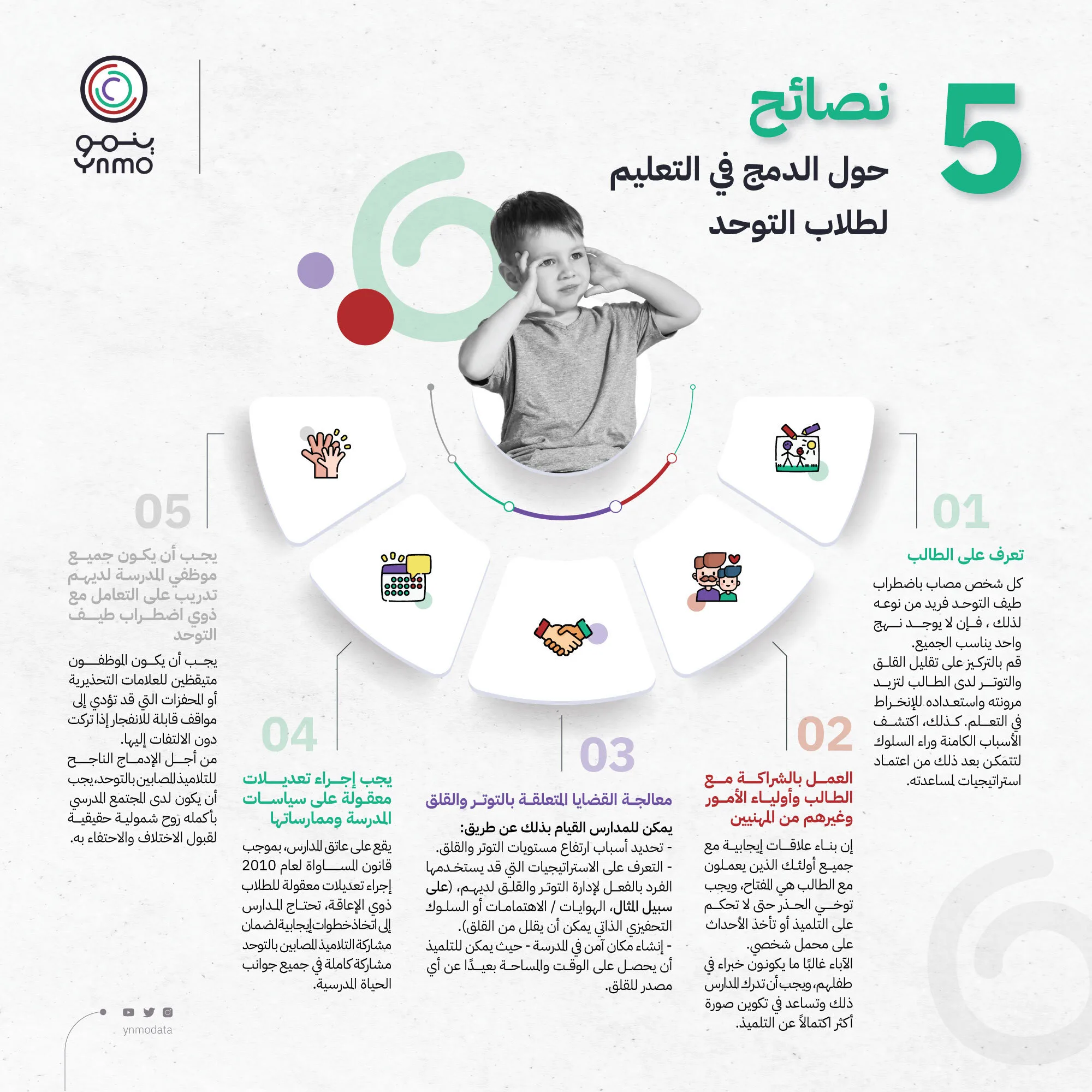
Top 5 Autism Tips: Inclusion in Education