


Impairment of Vocal Coordination in Children with Autism Spectrum Disorder
July 7, 2018
The scientific paper on which this article is based addressed communication patterns in children (2–3 years old) with autism spectrum disorders, which emerged as findings from numerous studies.
Autism Research 4: 177-188, 2011
A summary of these patterns is as follows:
- Abnormal eye contact patterns
- Limited social communication
- Weak joint attention
- Inconsistent responses by the child when their name is called (responding sometimes and not at other times)
- Limited nonverbal communication
- Inability to respond to gestures or inability to use them
- Limited pretend play
- Limited motor or vocal imitation
- Limited desire for communicative games or interacting with people
- Delay in the onset of developmental language emergence or delay in developmental language progression
- Non-systematic vocal phenomena
And because the article is about non-systematic vocal phenomena, it shed light on a study conducted on a sample of children (18–36 months) with autism spectrum disorders. In this study, the researchers recorded audio clips of these children and analyzed them, focusing on their pronunciation of sounds, specifically the consonants the children used in their babbling and in their attempts to pronounce words. The results of these analyses were compared with the results of other analyses of audio clips of non-autistic peers of the same age, and also with analyses of audio clips of younger children who were at language levels similar to those of the children with autism.
This study revealed that the fundamental difference between children diagnosed with autism spectrum disorders and their age-matched peers and language-matched peers lies in the quality and quantity of certain sounds they produce—specifically, those accompanied by high pitch and that are verbally unaligned. By verbally unaligned, I mean meaningless. Specifically regarding the sample participating in this study, the results indicate that the language delay occurring in these children diagnosed with autism spectrum disorders is not the result of a deficit in their speech sound acquisition skills; their sound pronunciation skill and its development, even if delayed or slow, climbs the same developmental phonetic ladder that typical children's language climbs. In other words, this study found that language delay/impairment in children diagnosed with autism spectrum disorders is not attributable to a deficit related to the acquisition of linguistic sound systems, but rather to a neurological deficit that prevents them from "coordination." This indicates that the children (participating in this study) diagnosed with autism spectrum disorders possessed the same sound systems possessed by their peers in both groups, but they did not use them with coordination and in the same manner.
What is the meaning of coordination / what is meant by "with coordination"?
Well, before the end of their first year, children generally begin automatically coordinating their vocal outputs to align harmoniously with the sounds of the language surrounding them. For example, a child surrounded by the English language will automatically work on coordinating their vocal outputs to match the sounds of the English language. It would be illogical for such a child to acquire the "kh" or "h" sound because they do not exist in English, which is their native language.
In contrast, we may not find this coordination in some children, which may be a warning sign that something is amiss with them. We may find that the child produces various sounds that do not represent anything in their surrounding environment, and most of them may be vowel sounds.
The absence of this phonetic-linguistic harmony between the sounds children produce and the language surrounding them contributes significantly to language delay or even language impairment. The same researchers also mentioned that the absence of this coordination at an early age (between 9–12 months) may be an indicative marker of the presence of autism spectrum disorders, especially in children who have a brother/sister with the disorder.
Finally, babbling in typical children is considered essential because it helps them develop their vocabulary, so what about delayed or struggling children? Therefore, we must intervene as early as possible to urge and encourage these children to coordinate their vocal outputs in accordance with the sounds present in their native language. And because children at this age tend to imitate animal sounds and object sounds more easily than word sounds, we urge mothers and caregivers to engage in pretend play with their children and teach them animal sounds and object sounds (for example: the sound of a clock, the sound of a car, the sound of a fire engine... etc.).
This may facilitate the process of coordinating their vocal outputs and consequently guiding and supporting them in acquiring language.
Originally published in Arabic. This English version was produced with AI-assisted translation; the Arabic original remains the reference.
Related articles
Is Your Child’s Language Developing Properly?

The Best Mistake I Made as a Special Education Teacher

The Role of Technology in Reducing Teacher Stress
The Golden Difference in My Students' Lives
How Do We Train Parents in Early Intervention?
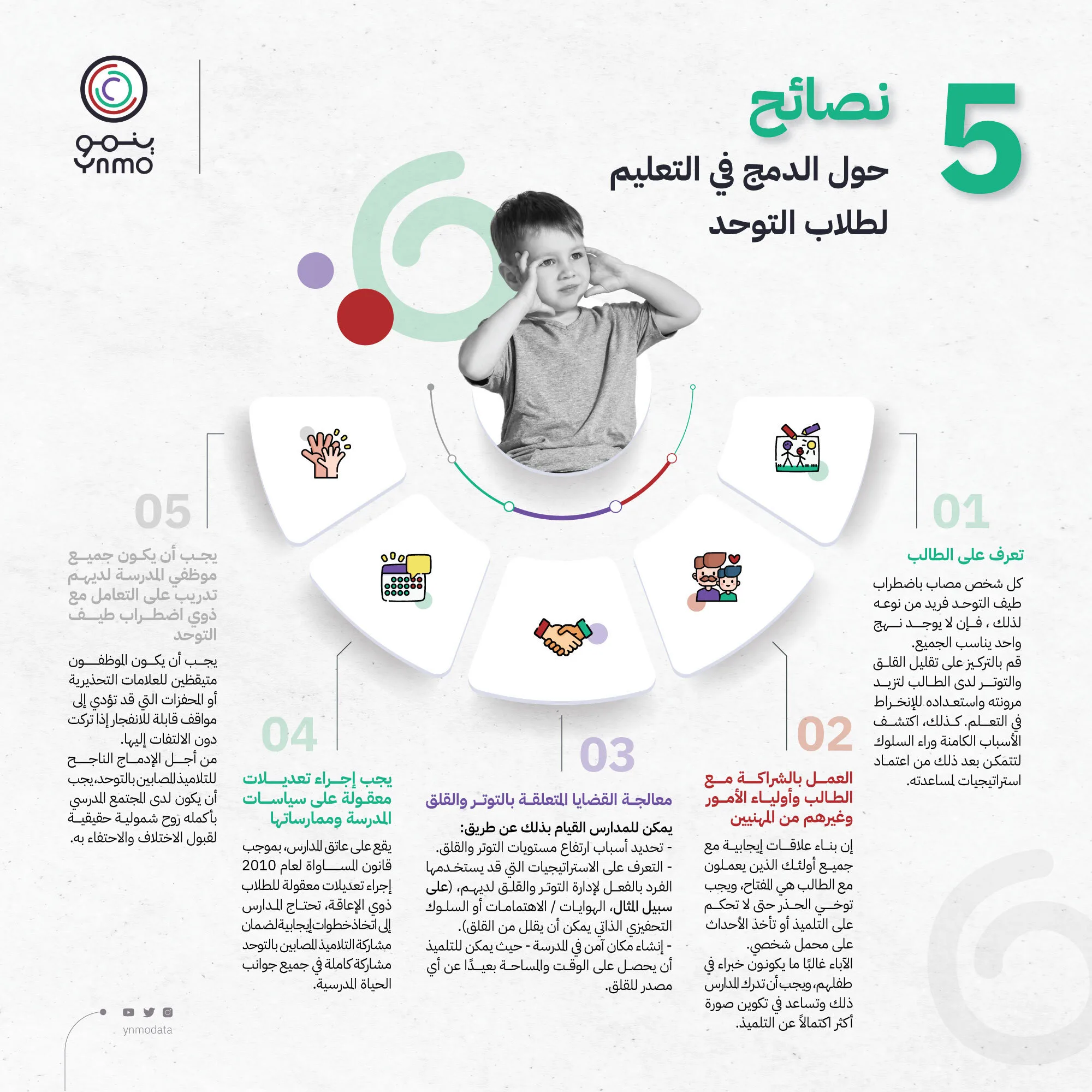
Top 5 Autism Tips: Inclusion in Education