

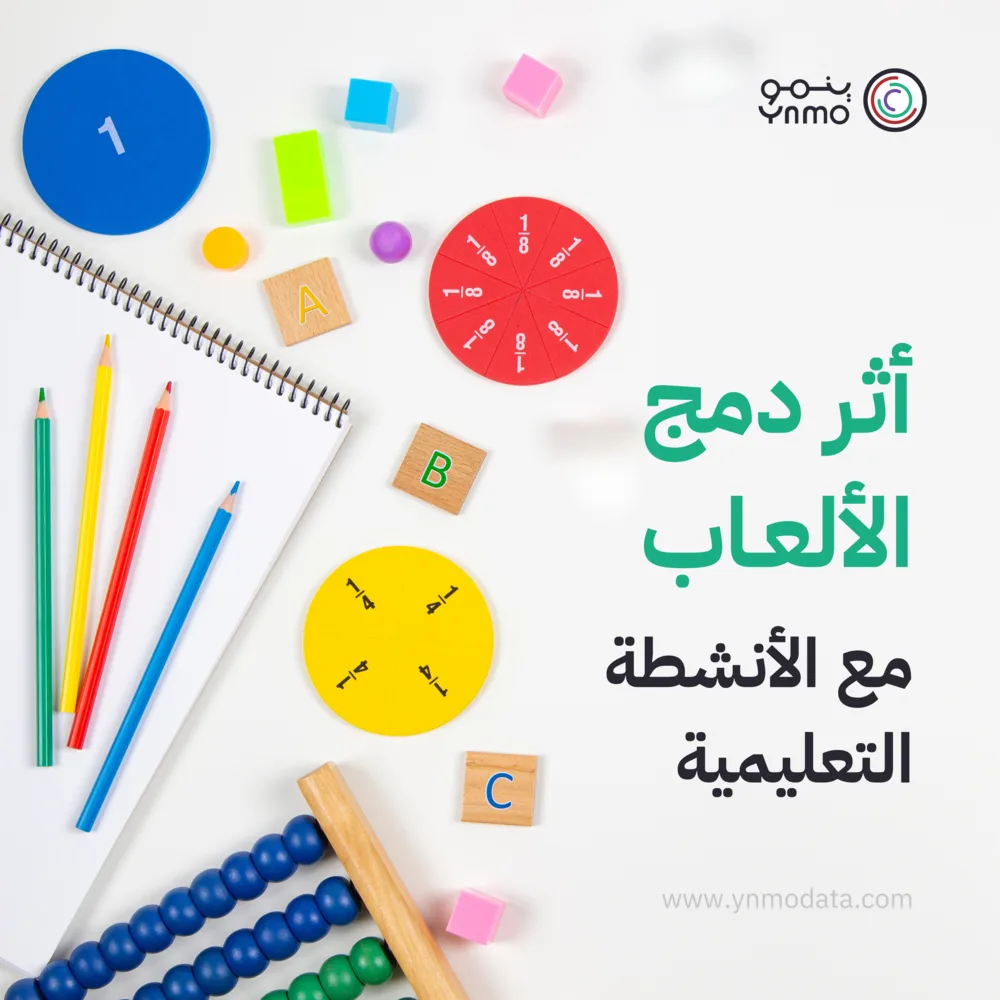
The Impact of Integrating Games into Educational Activities!
June 5, 2022
A new study presents promising results for early childhood programmes aimed at developing children's executive function through play, as children in classrooms that included the play-based programme showed significant improvements in executive function, language, and motor skills. The study's results were published in the journal "Frontiers in Psychology".
Executive function refers to a group of mental processes that help people regulate their behaviour. These crucial skills include inhibition, working memory, and flexible thinking. Studies also indicate that children who score higher in executive function perform better in the future, showing academic success, social competence, and mental health.
The study's authors, Robbin Gibb and her team, conducted a study to explore the effectiveness of a preschool programme designed to help children develop executive function. The play-based programme, called Building Brains and Futures, uses ten skill-building games to help children practice working memory, cognitive flexibility, and inhibition. These games were designed to be easily integrated into the classroom and include activities such as block building and pretend play.
The pilot study compared a classroom that implemented the programme (experimental group) and a classroom that did not implement the programme (control group) and found promising preliminary results. The programme was then implemented across four different educational sites, with each group comprising a total of 68 preschool children.
Classroom teachers first attended a workshop where they were oriented on the programme. They were then asked to integrate at least one game daily into the classroom and rotate through all ten games regularly. To measure the programme's success, the researchers also asked the children to complete four different tabletop assessments at the beginning and end of the school year, and parents also completed questionnaires to assess their children's behaviour.
According to the results, children showed improvements in three out of four tasks. First, children made fewer errors on two core tasks that required them to recreate four models of building blocks. This task required children to keep the task instructions in mind, remember where to place the block, and imagine the model from different perspectives. Children also showed improvement in the "grass or snow" task, which prompted them to adopt the idea that a white sheet represents grass and a green sheet represents snow, testing their inhibition, memory, and flexible thinking.
The results further showed that better performance on the tabletop tasks was associated with better behaviour according to parent questionnaires. For example, children who were faster at completing the large block assembly task scored higher in communication, gross motor skills, problem solving, and personal/social aspects of the Ages and Stages Questionnaire, which is considered a broad-scale measure for screening general developmental progression. ASQ-3™ consists of 21 questionnaires designed to identify young children who need a more comprehensive developmental assessment of their communication, gross motor, fine motor, problem-solving, and personal-social skills.
The study authors also noted that all classrooms were able to easily integrate the games into their regular activities, indicating that the programme can be flexibly integrated into early education programmes. However, the study was not without limitations. For example, because the researchers focused on average data, they acknowledged the possibility that some children improved in certain areas while others did not. Further examination of the data may provide insight into the factors that influence a child's success in problem solving.
Originally published in Arabic. This English version was produced with AI-assisted translation; the Arabic original remains the reference.