

The Equality Model in Special Education Does Not Mean Equity
October 18, 2021
According to the special education approach, every child differs in their starting point. As a community committed to serving children with disabilities, we need to transition from a model focused on equality to one working toward equity. Both equality and equity aim to ensure fundamental fairness. With equality, the ultimate goal is simple fairness—everyone has the same starting point and is treated in the exact same way. But with equity, the assumption is that not everyone starts from the same place—therefore, each person is given what they need to be successful, based on their unique abilities and needs.
Here are tips schools can implement to ensure equality is the driving force for all children receiving special education services.
1. Principal Leadership
Principals must take an active role during the development of the individualized educational plan, and a leadership role within the school. In special education, the principal is one of the key elements in the school environment and can send a message to the school community by showing an active interest in special education. Principals also play a major role in supporting the school environment and ensuring every child receives all the resources necessary to achieve success and growth. Although individualized education program meetings consist of many members, the principal always retains a special role and has a unique ability to influence each child's education. The school principal can move the school from equality to equity by ensuring the right resources and services are available for every child.
2. Developing a Quality Individualized Education Program
The individualized education program is the foundation of special education and guarantees the legal and educational rights of every child. Special education teachers must dedicate time and care to developing each child's individualized education program. The quality of the individualized education program is directly related to the quality of education and services provided to the child. Some schools copy and paste content, services, and goals from one child's individualized education program to another for convenience. This approach significantly diminishes the quality of the final product. Remember that the present level of academic achievement must align with the goals of the individualized education program. At a minimum, ensuring the alignment of academic achievement and goals will go a long way in ensuring quality. It is difficult to establish educational equity without a strong, personalized educational program designed uniquely for the child based on their needs. This is where Ynmo's role comes in emphasizing the importance of developing an individualized education program. Through Ynmo, digital data for all your students can be collected, enabling you to design the individualized plan.
3. Utilize Online Learning and Blended Learning Options
If a child has a significant academic deficit, regardless of disability or setting, personalized learning can help. Whether before school, during intervention time, during small-group instruction, or in an after-school tutoring program, all students with deficits can benefit greatly from personalized learning using diagnostic assessment components.
In order to catch up with their same-age peers, students with disabilities often need more support and intervention methods. We need to move beyond thinking of the delivered curriculum as one-size-fits-all and start personalizing and expanding learning for those who truly need it. One way to achieve this is by leveraging new educational technologies that enable us to deliver truly personalized instructional support.
4. Let Data Drive Instruction and Intervention
There is a cyclical process of assessment, intervention, instruction, and reassessment in the field of special education. If we want to provide children with educational equity, we must pursue proactive, high-impact, research-based best practices and avoid practices that diminish a child's true learning potential.
Today, there is no shortage of data available to assist us in this pursuit. The boom in the educational technology industry has led to solutions that allow schools to collect abundant amounts of student data. Whether academic or behavioral, tracking performance, evaluating the effectiveness of interventions, making adjustments, and differentiating instruction have become easier through diagnostic learning tools that allow schools to make data-driven instructional decisions.
5. Comprehensive and Individualized Lesson Planning
Lesson preparation is the key to success in special education, and it is essential that the teacher plans individualized instruction for each child. Too often, we deliver a one-size-fits-all lesson—even within special education. Yet educational equity is not achieved with a single instructional objective for everyone. Planning creative activities, differentiating instruction based on each child's needs and performance, and enthusiastically engaging each child in the learning process are the key components of educational equity.
6. Setting High Standards for Every Child
Having a disability does not mean a child cannot be pushed to achieve great things. It is okay for a child with a disability to struggle and work their way through solving a problem. Children usually rise to the level we expect. Although this may sound like a simple recommendation, numerous studies emphasize the importance of high expectations and teaching children a growth mindset. Part of ensuring equity is fostering positive self-belief and faith in one's own abilities. We must look beyond mere academic instruction and consider the whole child. For a child to receive educational fairness, they must understand that they are capable and worthy of high achievement.
7. Motivation and Enthusiasm
All students thrive on positive feedback and encouraging words. No matter how challenging the child or situation may be, stay positive and enthusiastic. The power of positivity is boundless in the world of special education. Enter the school and classrooms with a positive and enthusiastic attitude. Too often, we focus on the academic needs of children with disabilities, but truly educating a child requires helping inspire and motivate children to live, learn, and reach their full potential.
Adapted translation
https://www.rethinked.com/blog/2019/03/06/7-tips-for-equity-in-special-education/
Originally published in Arabic. This English version was produced with AI-assisted translation; the Arabic original remains the reference.
Related articles
Is Your Child’s Language Developing Properly?

The Best Mistake I Made as a Special Education Teacher

The Role of Technology in Reducing Teacher Stress
The Golden Difference in My Students' Lives
How Do We Train Parents in Early Intervention?
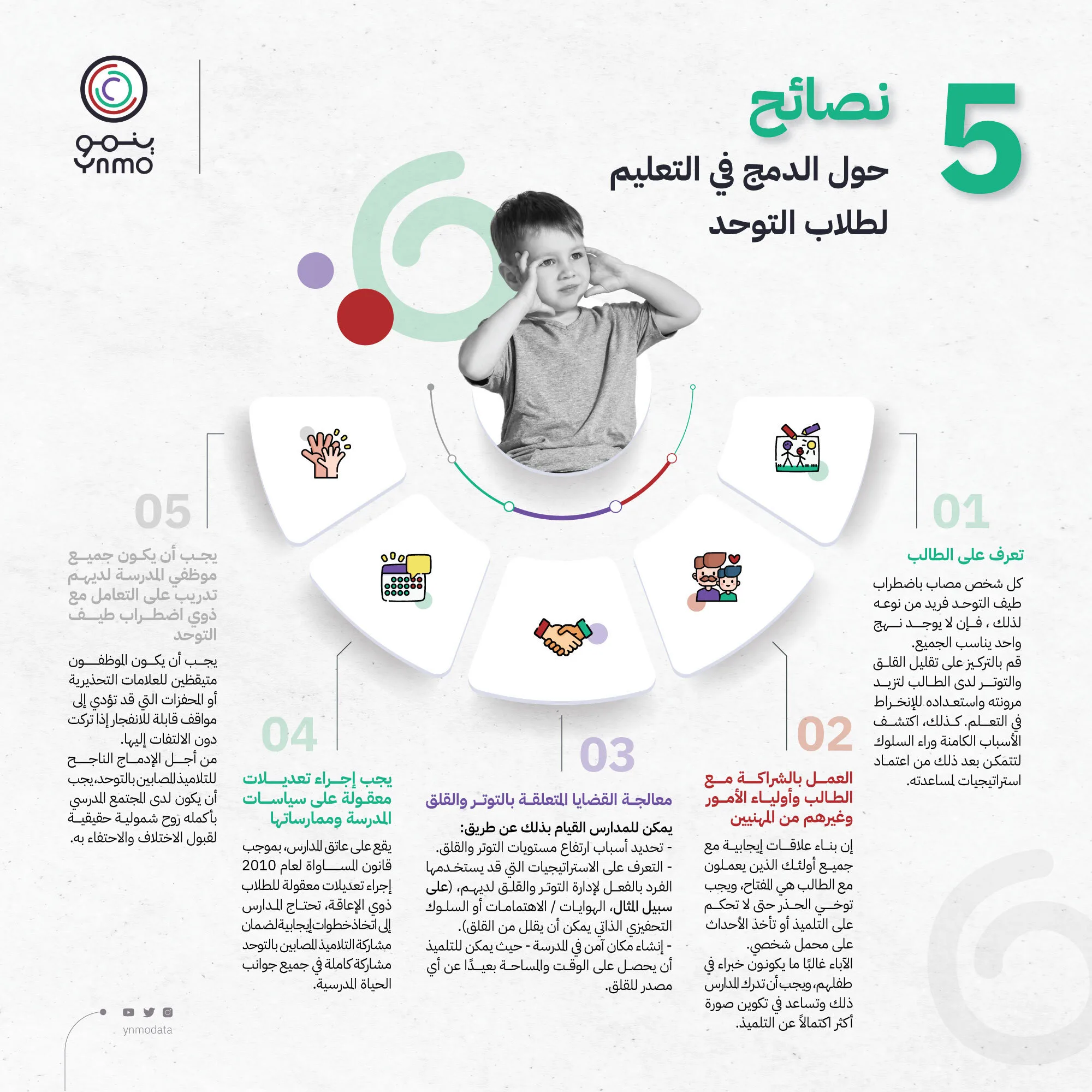
Top 5 Autism Tips: Inclusion in Education