


Successful Social-Emotional Learning in 5 Ways
October 20, 2021
Social-emotional learning (SEL) is the process of developing and using social and emotional skills. Social-emotional learning helps children handle emotions and set goals, and it also helps with interpersonal skills such as working in teams and solving problems. Research has shown that students who are developed socially and emotionally: improve academically, increase prosocial behaviors and attitudes, and are less likely to experience mental health problems or engage in risky behaviors.
Throughout this article, you will learn about ways to ensure the success of social-emotional learning.
1. Appoint a leader for social-emotional learning
To ensure long-term impact on students, social-emotional learning needs a person, or multiple people, who consider implementation quality a primary component of their responsibilities. For example: at the Urban Assembly School for Media Studies, the principal allocates time and provides space for the instructional leader to manage their social-emotional learning team. This in turn gives the social-emotional learning team the opportunity to focus on core instructional quality, integrate social-emotional concepts, and organize staff professional development around social-emotional concepts. This approach establishes accountability around the work and ensures the school's stated goals in this area are achieved.
2. Identify ongoing professional development opportunities
Ongoing suggestions are among the most powerful drivers of learning for students and adults. If you want your school to impact a student's social-emotional development, time must be set aside for it. For example: the principal ensures that teachers have the opportunity to plan lessons based on social-emotional learning, and integrate strategies—such as cultural concepts—into the curriculum on a monthly basis.
3. Ensure all staff are equipped to support social-emotional development
High-quality social-emotional learning aims to transform the lives of children, and consequently the schools and communities in which they live and learn. Social-emotional learning is more than just a class or an assessment; it is the process through which every student and adult in school, at home, and in the community develops. It is the skills, attitudes, and values that form the foundation for how individuals relate to others and to themselves, how they solve problems, and how they make decisions. Every adult in the school must have the tools necessary to support their students' social-emotional development. For example: staff, including the principal, teach a series of lessons where students are directly taught the social-emotional skills vital for pursuing a career in healthcare.
4. Explicitly and directly teach social-emotional skills to your staff and students
In order to transfer learning from the classroom to the real world, students need to know the concept they need to learn (vocabulary), the skill associated with the concept (behavior or thinking process), when to use it (application timing), and have sufficient practice to perform the skill under conditions of stress or emotion. The same applies to social-emotional skills. Just as importantly, students need to see the adults they trust model these concepts on a consistent basis; this process allows students to integrate skills into contexts different from those in which they first learned them. For example: a school principal provided the opportunity for every female student to learn the social-emotional skills essential for their future success in business. This space allows young women in the school to develop a shared vocabulary, give feedback to others as they practice their skills, and recognize and deploy these skills in the workplace and the community.
5. Assess what your students are learning
Learning requires change: a change in mental models, thoughts, and behaviors. Without change there is no learning, and without assessment we cannot determine change. Schools need to prioritize assessing students' social and emotional development. For example: the principal creates the conditions that allow students the opportunity to self-assess their social-emotional development, compare it with their teacher's assessment, and then set goals around social-emotional learning that will make them better leaders, so students can track their goals over time so that change is visible to them and to their teachers.
Adapted translation
https://www.understood.org/articles/en/social-emotional-learning-what-you-need-to-know
.https://www.rethinked.com/blog/2019/02/07/5-ways-to-ensure-sel-success/
Originally published in Arabic. This English version was produced with AI-assisted translation; the Arabic original remains the reference.
Related articles
Is Your Child’s Language Developing Properly?

The Best Mistake I Made as a Special Education Teacher

The Role of Technology in Reducing Teacher Stress
The Golden Difference in My Students' Lives
How Do We Train Parents in Early Intervention?
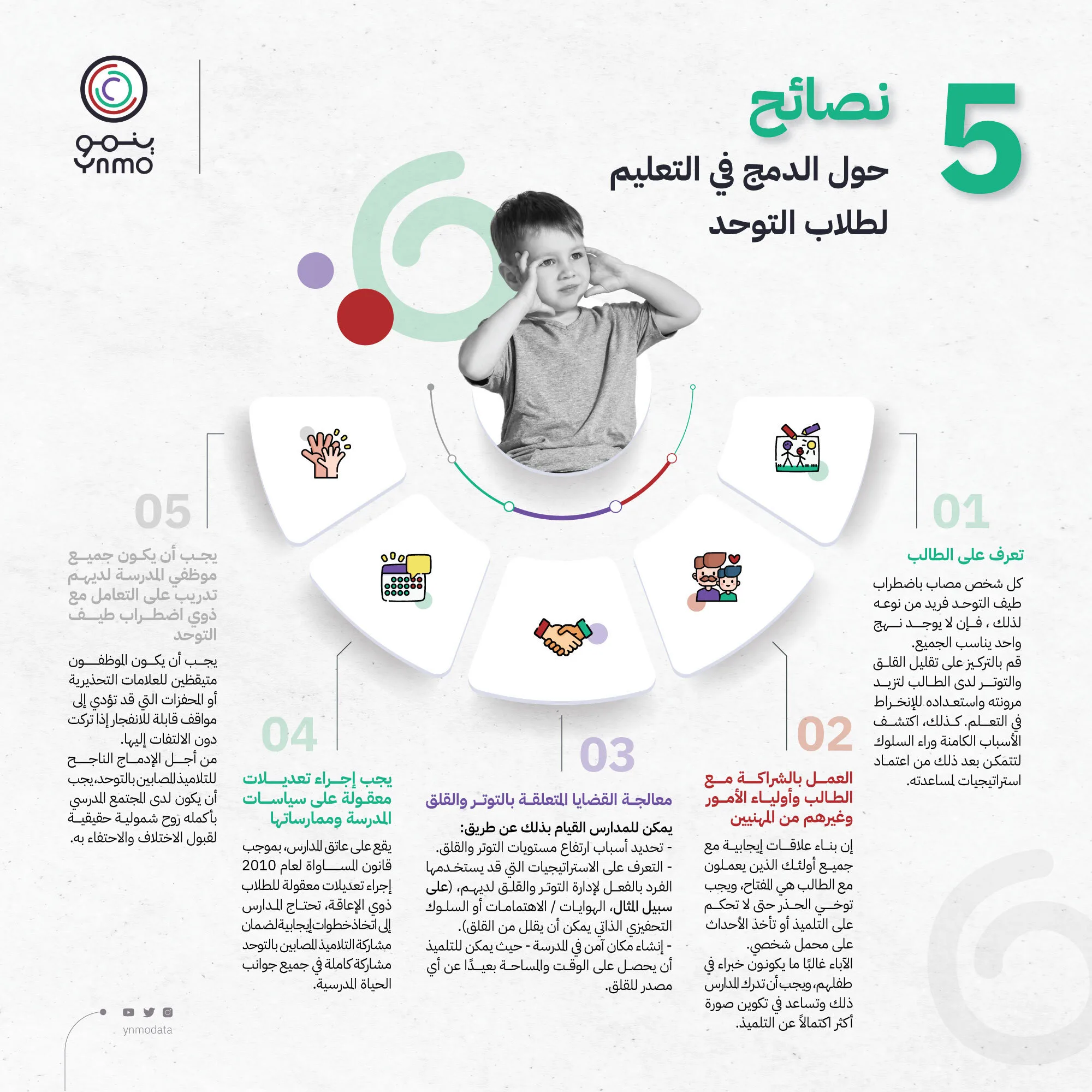
Top 5 Autism Tips: Inclusion in Education