

How to Apply the Generalization Strategy?
October 26, 2021
The term generalization refers to when a learned behavior occurs outside the learning environment. Generalization is considered the primary goal for those who work with individuals with disabilities, and it increases the likelihood of the learner's success in performing the task independently without having to rely on the assistance of a specific teacher or tools available only in a single educational setting.
You may often encounter difficulty with a child generalizing a skill. A child might learn "red apple" at school as a picture, but when they want to eat apples at home and see a "green apple", they do not ask for it or point to it. Here, we can say that response generalization did not occur for the child. They did not generalize that the picture of the (apple) learned in class is the same as the one at home. A child might also learn to greet others upon entering the classroom, but when in another situation such as going to a family gathering, they do not greet people as they did in the classroom due to the difference in people and place. The more varied the situations are during the child's training, the greater the opportunities for skill generalization.
In this article, we will help you apply some generalization strategies to help the child transfer the effects of learning.
1- Training the skill in different places/with different people.
It is enjoyable for a child to learn in different places; at times learning in the classroom and at other times in the playroom, and they might be training with you or with another specialist/teacher.
For example: when you train your child to turn their favorite toy on and off, response generalization will occur if they turn other toys on and off in the same way,
2- Generalizing the skill across different places/different people.
A child learning in different places and with different people enriches their skill experience. When they learn to "greet" in the classroom and go somewhere and encounter people in the "waiting room", they will greet them as previously learned with different people. Here we can say that the child has achieved response generalization across several places and with different people.
Also, when a child learns at home to wash their hands after finishing a meal, response generalization will occur when they wash their hands after finishing a meal at school.
3- Reinforcing and praising the child when they generalize the response with peers and others.
You might see your child waiting for their turn to play on the swing; here, it is good to reinforce the child for generalizing the response in the skill of turn-taking.
And when a child goes to their friend to ask to share colors for drawing on the board, saying: "Can you share coloring with me?" Here we praise the child for generalizing the response through the requesting skill.
4- Providing sufficient examples during teaching.
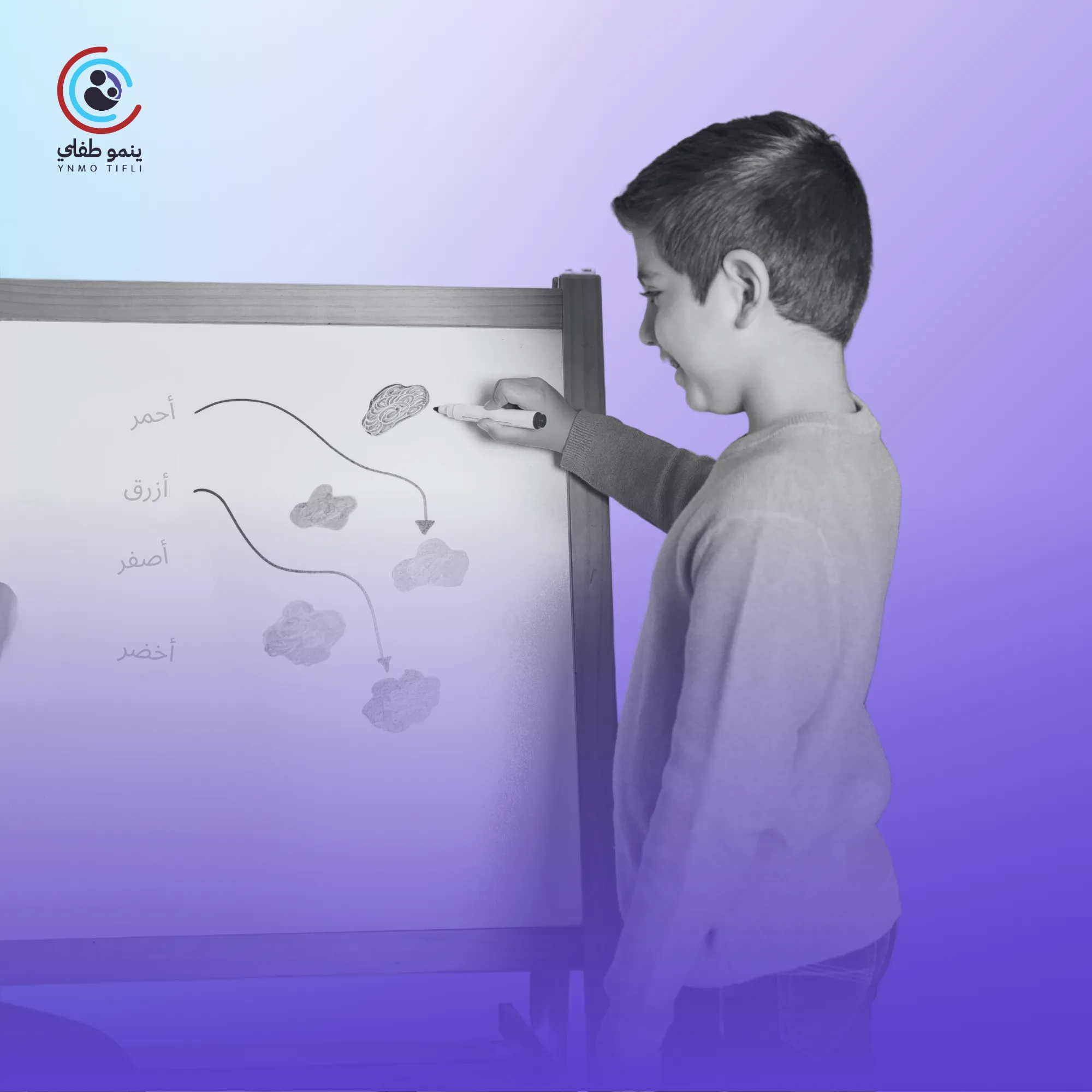
Always try to enrich your child's knowledge base with sufficient examples. For example, when you train them to identify colors (red - blue - yellow), give diverse examples such as: a red cup, a red apple, blue shoes, a blue pen…
"Providing diverse examples = broader generalization"
5- Training on more options
Offer wider options. When training your child to answer the question: "How are you?", the answer might be: "Praise be to God", it might be: "Fine", and it might also be: "Fine, praise be to God."
You might ask a child their name by saying: "What is your name?" or you might say: "Who are you?" The answer will be the same.
The more options you provide in the learning process, the greater the opportunities your child will have to generalize the response in new situations.
6- Intermittent reinforcement "maintains response generalization in different situations"
Continuous reinforcement is the appropriate reinforcement when teaching a child a new behavior or during the phase of helping the child acquire the behavior. However, when wanting to help the child continue performing the learned behavior, reinforcement must become intermittent (partial). It is this pattern of reinforcement that helps generalize the skill and maintain its performance after training ceases.
7- Simulating common stimuli in the natural environment.
When training the child, be sure to start by teaching them elements close to their environment. When you teach a child to request water by saying: "I want water", make sure before training whether they call it "maa’", as another might call it "moya".
And some call a bicycle "darrajah", while others call it "sekel".
"A child will not generalize a response unless there is a connection between what they learned and their environment."
Originally published in Arabic. This English version was produced with AI-assisted translation; the Arabic original remains the reference.
Related articles
Is Your Child’s Language Developing Properly?

The Best Mistake I Made as a Special Education Teacher
The Role of Technology in Reducing Teacher Stress
The Golden Difference in My Students' Lives
How Do We Train Parents in Early Intervention?
Top 5 Autism Tips: Inclusion in Education