


5 Common Beliefs About Sign Language and Autism Spectrum Disorder
June 18, 2020
Until recently, many special education experts were hesitant to teach sign language to children with autism spectrum disorder or to encourage parents to practice sign language at home. This reluctance stems from a number of beliefs and biases against sign language—most of which have been proven false by current, more in-depth studies and research.
Some specialists fear that teaching sign language will discourage children with autism spectrum disorder from acquiring spoken language, create additional social barriers between children with autism spectrum disorder and their peers, or be burdensome by requiring teachers and parents to effectively become bilingual.
Common beliefs about sign language:
Many studies on the effects of sign language on children with autism spectrum disorder have shown that teaching at least some basic signs in early childhood education programs or at home can be beneficial, especially for non-verbal or verbal children with autism spectrum disorder. Below are the top 5 common beliefs that make educators hesitate to use all available means to communicate with children with autism spectrum disorder:
Belief 1: Learning sign language will reduce the likelihood of children with autism spectrum disorder speaking.
Fact: Although this misconception is prevalent and persistent, research shows that sign language and spoken language are complementary—and that learning sign language can help children with autism spectrum disorder learn to speak. This is because the acquisition of these two distinct and diverse languages is remarkably similar, even though the languages themselves are very different. Specifically, language acquisition is similar because the developing brain processes both visual language and auditory language in the same way. In general, children with autism spectrum disorder are more likely to be visual learners than auditory learners, so it makes sense to leverage linguistic strengths rather than areas of need when first teaching communication skills. In addition, when children developing language skills experience success and see the power of expressing their needs to others, it encourages them to try learning new skills.
Belief 2: Sign language is not a "real" language in the same way spoken language is a real language.
Fact: Just like spoken language, sign language is a complex and sophisticated symbolic communication model that can be combined with other forms of non-verbal communication such as picture exchange, gestures, facial expressions, and even eye gaze in order to express oneself effectively. Just like spoken language, sign language is a natural language with its own grammatical structures, idioms, signs, words, and figurative expressions.
Belief 3: Learning sign language and spoken language at the same time distracts the child.
Fact: Research shows that sign language and other language acquisition skills can be taught together without distracting children. In fact, teaching sign language and spoken language simultaneously has been proven to help children with autism spectrum disorder improve in spoken English, achieve greater literacy in written English, and develop greater communication competence overall. Restricting or prohibiting the learning of one form of language in order to promote or improve the use of another form of language is unnecessary because learning both actually supports the development of effortless and integrated language.
Belief 4: In order to teach sign language, I must be fluent in sign language.
Fact: This is like saying that in order to help your child learn elementary school math, you must have a PhD in calculus, or to teach your child kitchen skills, you must have a degree in culinary arts. All that educators and parents need to do to communicate through sign language and teach sign language to children with autism spectrum disorder is to stay a few signs ahead of the child. There are plenty of free and inexpensive tools to learn basic signs, which is all you need when trying to teach and communicate with a young child.
Belief 5: No one will understand a child with autism disorder who uses signs, so learning sign language will create more social and personal barriers between children with autism spectrum disorder and their peers.
Fact: Communicating in any form is good for social and interpersonal communication skills. If a child is open to learning basic signs at an early age, it not only fosters and empowers interaction with family and peers, but also helps the child develop stronger cognitive abilities, acquire knowledge, participate more fully in the surrounding world, and gain a stronger sense of personal identity.
In addition to all the myths and concerns mentioned above, many specialists and parents feel confused about when to introduce sign language to children, as other communication tools such as assistive electronic devices and the Picture Exchange Communication System (PECS) are used, and whether children who use other communication tools also need sign language.
The truth is, it is never too early to try to communicate with non-verbal or verbal children with autism spectrum disorder. While sign language can help with speech, when it comes to children with autism spectrum disorder, spoken language should not be the ultimate goal or the ultimate measure of success. The ultimate goal is competence in communication, not a specific form of communication..
In other words, the question should be: "Is the child communicating well?" or "Can I understand the child?" and not: "How is the child communicating?" or "Is the child communicating the 'right' way?"
Because the level of communicative competence acquired by children with autism spectrum disorder is an indicator of future academic performance as well as social and adaptive skills, we must continue to use all methods available to us to improve outcomes in early childhood education.
Source (adapted)
Originally published in Arabic. This English version was produced with AI-assisted translation; the Arabic original remains the reference.
Related articles
Is Your Child’s Language Developing Properly?

The Best Mistake I Made as a Special Education Teacher

The Role of Technology in Reducing Teacher Stress
The Golden Difference in My Students' Lives
How Do We Train Parents in Early Intervention?
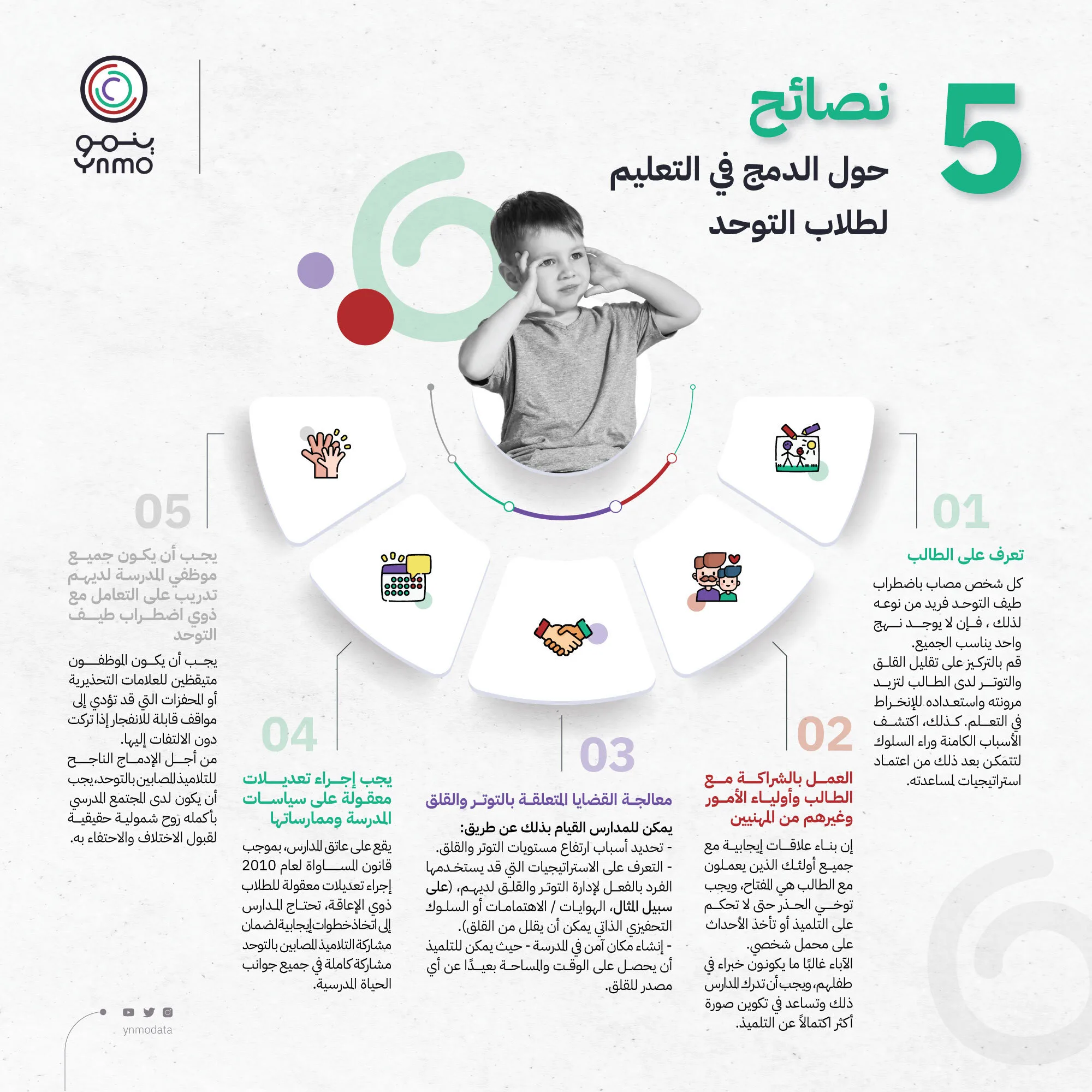
Top 5 Autism Tips: Inclusion in Education