


Why Are Some Educational and Rehabilitation Goals Not Achieved for Our Students with Special Needs?
October 31, 2021
Some practitioners in the field of care and education for people with special needs (such as special education specialists, applied behavior analysis specialists, physical therapists, occupational therapists, and psychotherapists) may feel embarrassed or perplexed when considering the reasons why certain educational and rehabilitation goals intended to be imparted to the students with disabilities they work with are not achieved.
Here we summarize some of these reasons, in which we might fall into one, some, or all of them without realizing it.
The first reason: Non-smart formulation of educational and rehabilitation goals. What we mean here is formulating goals in a SMART manner (i.e., specific, measurable, realistic, appropriate to the individual's needs and abilities, and time-bound for achievement). Formulating a goal in a non-smart way may lead to an inability to select appropriate teaching methods. Thus, the student's rate of progress is negatively affected. Always ask yourself: Is the educational goal set for the student a SMART goal?
Specific: A goal is specific when you have a clear visualization of the goal in all its aspects and it is clearly defined. A specific goal has greater chances of achievement than a general goal. Using the following questions may help: What is the thing you wish to achieve? How will you be able to achieve it?
Who will help you achieve it?
Where will you work on achieving the goal?
Measurable: This refers to measuring the goal itself, or measuring the degree of achievement quantitatively. Set consistent criteria to measure progress toward achieving each goal you establish. When you measure the goal's progress, you will be on track and reach the achievement of the goal by the specified date.
Achievable: A goal is achievable when it is realistic and suitable for the student's abilities.
Realistic (relevant to the type of service and the student's need): This means the goal is realistic and tangible, directly addresses the student's need, and forms an objective aligned with the capacity and desire to work on it. One of the things that helps us select appropriate goals for the student is the type of service. For example: if the service provided is applied behavior analysis sessions for a 3.5-year-old child with autism spectrum disorder who only possesses a few words, it is more appropriate that some of the goals attempt to impart language and early communication skills to this child (such as the skill of requesting preferred items). Or if the service provided is speech therapy sessions for a 7-year-old girl who has a good vocabulary and an average intelligence level, but has difficulties in building relationships and conversing with peers, it is more appropriate for these sessions to focus on goals that help the girl acquire the skills of initiating, maintaining, and ending a simple conversation, answering questions, or initiating questions, etc. Ask yourself: Why do you want to achieve it? What will this student benefit when the goal is achieved? Or what will the student acquire that improves their quality of life and contributes to their independence? Is the goal appropriate for their cognitive abilities or adaptive skills?
Time-bound: The time frame means setting a time for yourself to start working on the goal and a projected time to achieve it. This point is important; it binds you to knowing the time required to complete work on the goal. Educated estimation is a practice we may carry out as care and education service providers for individuals with disabilities.
Examples of writing a goal with smart phrasing:
The student will verbally name the numbers from 1–10 when asked to do so independently with 100% mastery over 3 consecutive sessions (by the end of April 2019).
Non-smart goal
The student will identify the numbers 1–10 without assistance with 100% mastery.
The second reason: Goals that are above the student's level. Aligning smart goals to the student's level is one of the most important factors in achieving these goals. You can know whether the goals are appropriate if they are formulated based on the results of initial assessments and tests of the student's level, in which data is collected through various tools and methods such as observation, rating scales, asking parents, and knowing the medical or rehabilitation history.
The third reason: Lack of therapeutic program intensity. This reason may result in the non-achievement of smart educational goals for educational and rehabilitation services whose implementation characteristics require intensity (such as applied behavior analysis services). For example, providing it in the form of one or two hours per week for a child with autism spectrum disorder who needs an early, intensive behavioral program (25–40 hours per week). We may attribute the non-achievement of goals to this reason (lack of therapeutic program intensity) amidst the shortage of academically and clinically qualified specialists.
The fourth reason: Not creating sufficient learning opportunities. Sometimes we may provide services at high intensity, for many hours, and over months or years without achieving a number of desired goals as stated in rigorous research and studies and based on expert opinions, but we may overlook the number of learning opportunities created for this student. Learning opportunities are one of the most important indicators directly and positively correlated with an individual's development and abilities. Creating repeated, sequential learning opportunities appropriate to the educational context will certainly accelerate the achievement of educational and rehabilitation goals for individuals with disabilities, and vice versa.
The fifth reason: Teaching methods. The teaching procedures used to teach the student play a pivotal role in achieving the goals and skills intended to be imparted. Using evidence-based teaching procedures and practices is the driving engine and energy generator that helps you achieve behavioral goals.
One of the teaching methods that might not be implemented is: generalization skill. For example, a single teacher teaching a student a specific skill using the exact same teaching aids and materials. Such as a teacher instructing a child with Down syndrome to classify animals based on their habitats (terrestrial, aquatic, amphibious), but using the same photographs of the ten animals without varying the teaching materials (such as using another set of photographs, symbolic pictures, 3D models, etc.). There are many similar examples. Generalization is fundamental in the educational process and must be planned for explicitly if the student faces difficulty in learning skills and generalizing them. Another reason related to teaching methods is the failure to fade prompts. What I mean here is that the specialist provides unnecessary assistance to the student, so the student does not reach the point of learning the skill independently. This is just an example of one case, but I will list some prompting strategies in another article.
The sixth reason: Professional development. Weakness in the specialist's skills and not continuously developing working methods may be one of the reasons goals are not achieved. Therefore, practitioners must continuously develop their skills to stay informed of the best and latest practices that enable them to help their students achieve their educational and rehabilitation goals.
Here we have summarized a set of reasons that may prevent the achievement of educational and rehabilitation goals for individuals with disabilities. We are pleased to have you share your thoughts with us to enrich Arabic content.
Read more about how to formulate behavioral goals?
Originally published in Arabic. This English version was produced with AI-assisted translation; the Arabic original remains the reference.
Related articles

Is Your Child’s Language Developing Properly?

The Best Mistake I Made as a Special Education Teacher

The Role of Technology in Reducing Teacher Stress
The Golden Difference in My Students' Lives
How Do We Train Parents in Early Intervention?
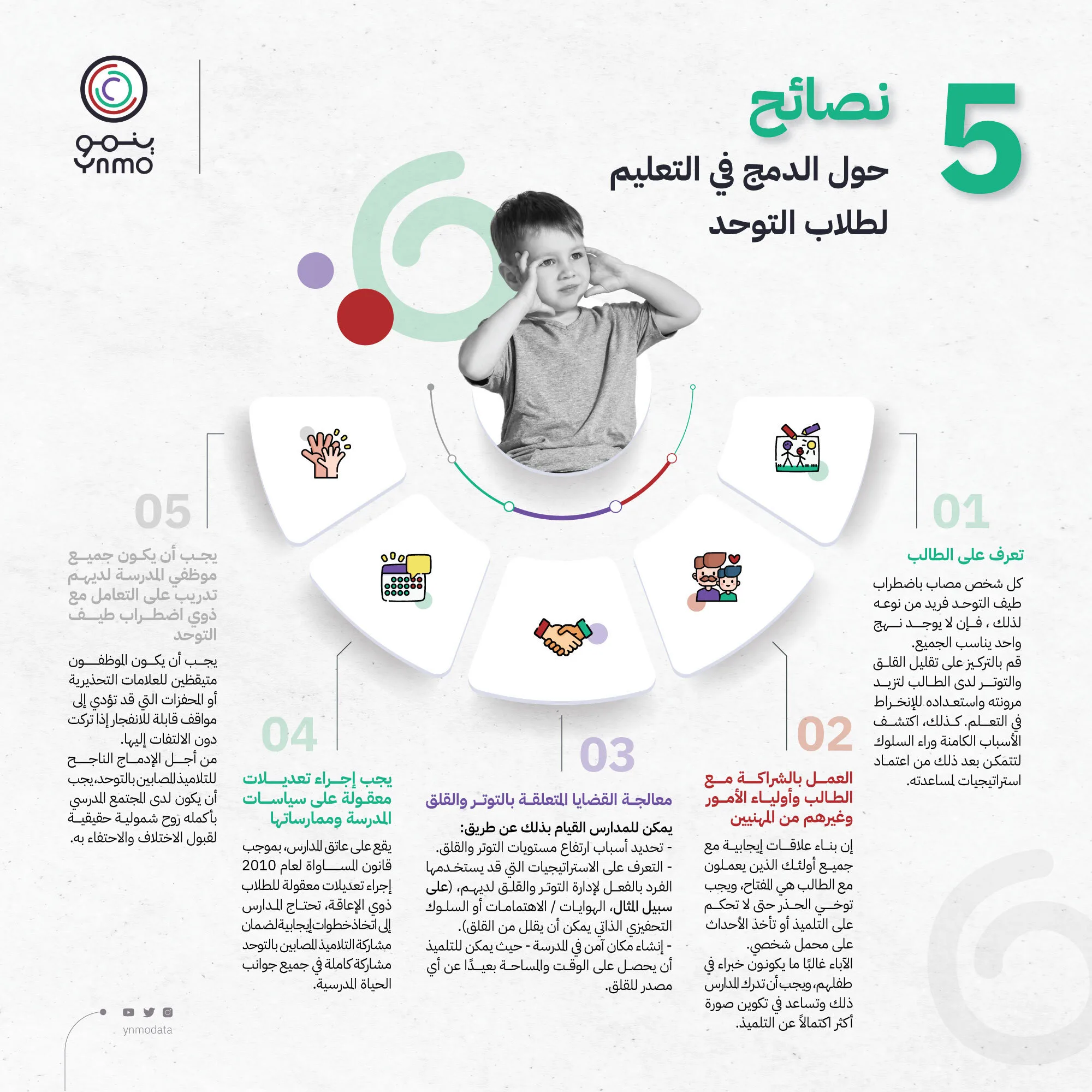
Top 5 Autism Tips: Inclusion in Education