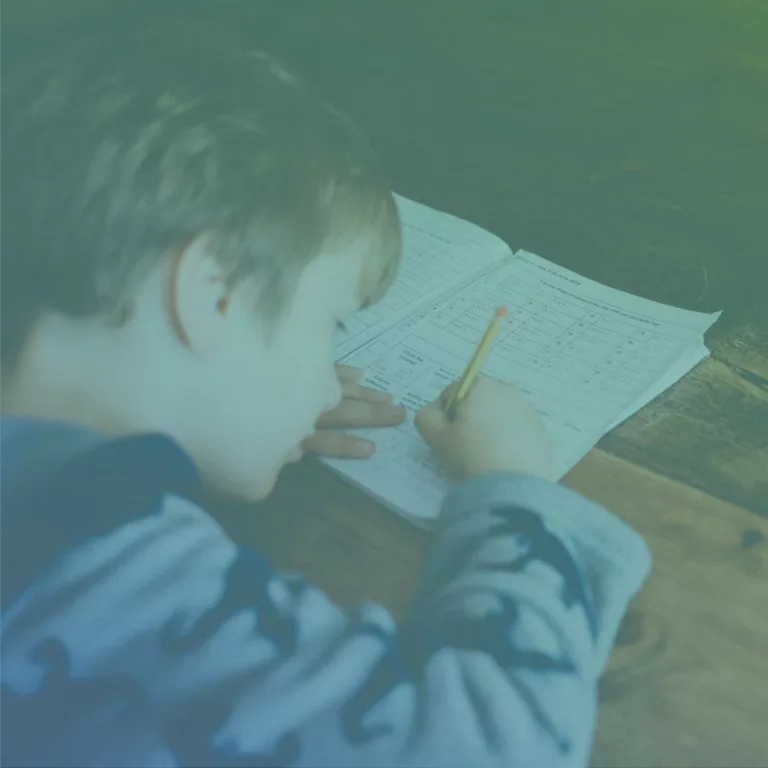


The Video Self-Modeling Strategy and Its Role in Enhancing Reading Skills in Students with Reading Difficulties
May 12, 2018
The video self-modeling strategy is an evidence-based strategy that can be used to develop behavioral and academic skills in individuals with disabilities. According to this strategy, a video is recorded of the child successfully performing the target skill, and they are then asked to watch the video and observe themselves performing the target behavior in order to imitate it until they can perform it independently and successfully. The efforts made by Creer and Miklich (1970) are among the earliest to highlight the effectiveness of using this strategy to modify inappropriate social behaviors; they implemented the video self-modeling strategy to modify the behavior of a ten-year-old child residing in a treatment center for bronchial asthma. The child was exhibiting many inappropriate behaviors that limited his integration with other children enrolled in the treatment center. The child had undergone several behavioral interventions but had not responded as required, until Creer and Miklich designed a behavioral intervention based on applying the video self-modeling strategy, in which the child was recorded performing the socially desired behaviors in the required manner. After the child watched those behaviors, he carried them out successfully, which contributed to his successful integration with his peers.
After the strategy was successfully applied to support desired behaviors in students, researchers moved toward evaluating the effectiveness of its application with students with disabilities to enhance their academic achievement. These efforts led to the emergence of a number of studies discussing the effectiveness of using the video self-modeling strategy to develop reading skills in elementary school students with reading difficulties, especially since 80% of students classified within the category of learning disabilities are diagnosed with reading difficulties. The results of these studies indicated the effectiveness of using the strategy with students with reading difficulties, as well as students with reading problems; reading interventions designed to include video self-modeling as a core component of the intervention significantly contributed to improving students' achievement in reading. The intervention's effectiveness was also evident in improving students' reading fluency, as the strategy enhances students' ability to read reading passages containing a specific number of words, within a specific timeframe, and correctly, which stimulates their reading comprehension skills. It is worth noting that applying the video self-modeling strategy with other strategies, such as peer tutoring, story mapping, or self-monitoring, contributes effectively to increasing their reading repertoire, potentially leading to closing the reading achievement gap between them and their peers who do not exhibit reading problems.
What further adds to the importance of this strategy is the feasibility of applying it at home and at school by following simple steps that can be implemented as follows:
1- Select a reading text appropriate for the student's level, taking into account appropriately determining the word count in the text and the reading skills included.
2- Identify an electronic device that can be used easily and independently by the student, for example (iPad, iPhone, Mac), through which you can use an application that helps you edit video well, such as the (iMovie) app.
3- Break down the reading text into several sentences. Read the first sentence, ask the student to read it, and record them on video. If the student reads it correctly and at an appropriate speed, move on to the second sentence and execute it in the same way. However, if the student reads the text incorrectly and at an inappropriate speed, delete their incorrect reading of the sentence, and ask them to repeat it until you obtain a recording that reflects their correct reading of the sentence, and so on until the recording of the student's reading of the entire text correctly is complete.
4- Review the recording before the student watches it. After ensuring its accuracy, ask the student to watch it several times while mimicking their reading until they are able to read the text fluently.
Through these steps, it becomes clear that using the video self-modeling strategy allows teachers to break down the skill desired to be taught to the student into several steps tailored to their ability, and allows the student to reattempt mastering each step until it is accomplished in the required manner. In addition, its reliance on the use of technology is considered one of the most important incentives driving students to achieve and repeat their attempts both at home and at school.
Originally published in Arabic. This English version was produced with AI-assisted translation; the Arabic original remains the reference.
Related articles
Is Your Child’s Language Developing Properly?
The Best Mistake I Made as a Special Education Teacher

The Role of Technology in Reducing Teacher Stress
The Golden Difference in My Students' Lives
How Do We Train Parents in Early Intervention?
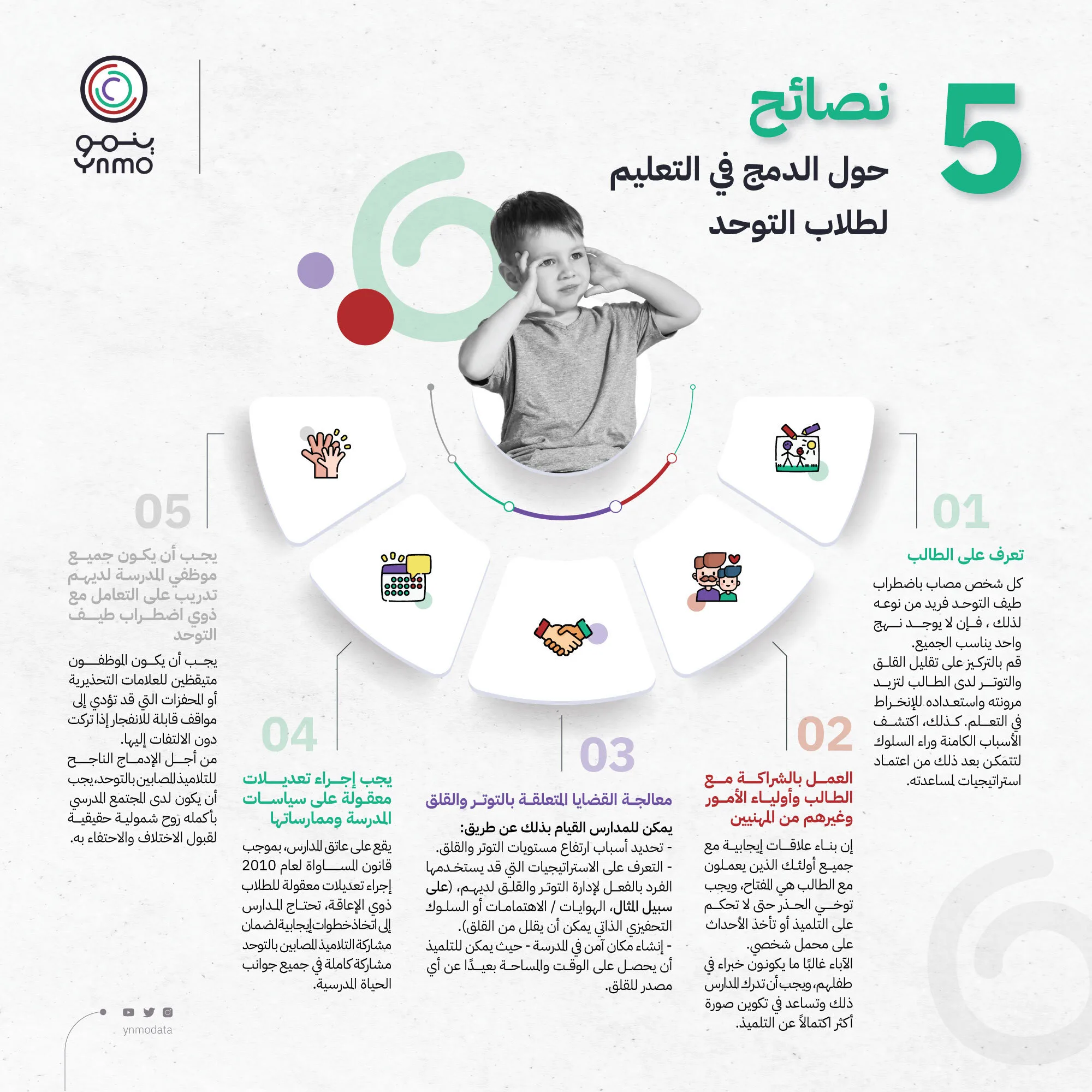
Top 5 Autism Tips: Inclusion in Education